
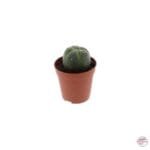
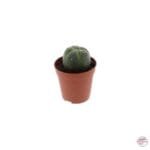
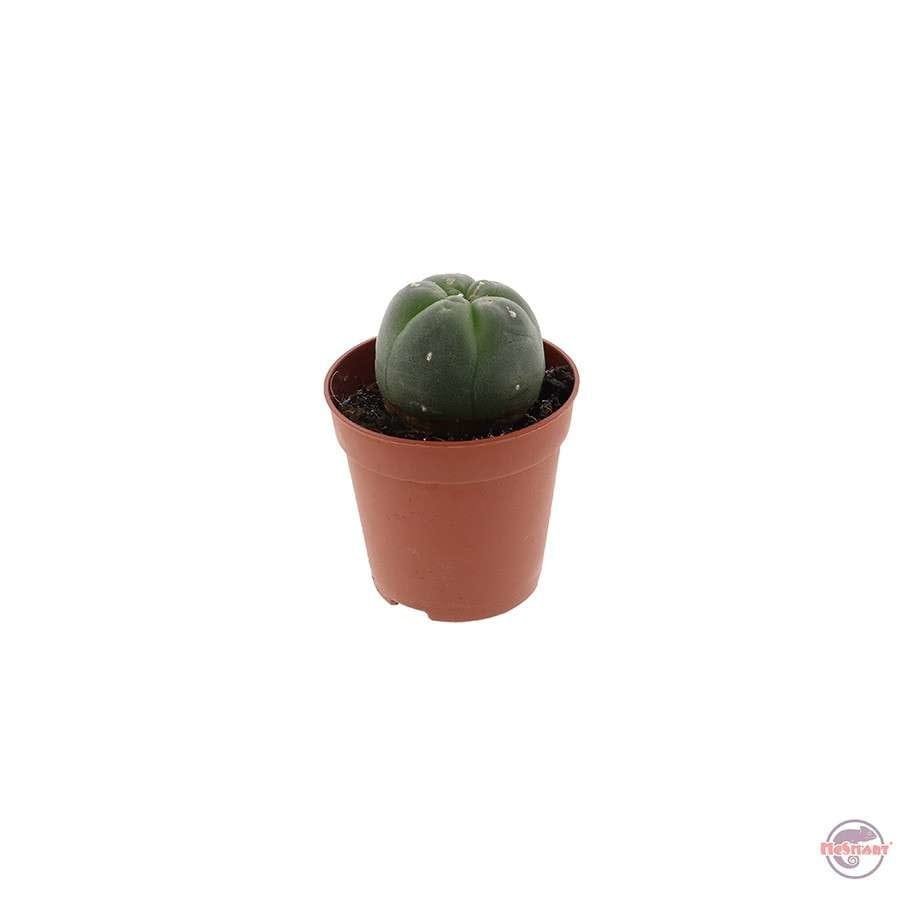
1. Peyote cactus 3 — 4 cm
A seed-grown, own-root Lophophora williamsii at 3–4 cm: five to seven years of patient greenhouse cultivation, and a crown that has reached flowering size. Not a cheap grafted specimen pushed to diameter in a year and a half — a slow desert plant that got here on its own roots.
In the wild the same diameter can take a decade or more, shaped by limestone soil, seasonal drought and temperature extremes that a greenhouse can only approximate. What we can do is not rush it, and that is the difference you are paying for.
If you want to compare, our 4–5 cm specimens are a further four or five years down the same road. Order before 16:00 and yours leaves the same day, shipped EU-wide with no customs complications.
Legal status: Owning and growing living peyote as an ornamental specimen is legal in the Netherlands, Germany and the UK. What is not legal anywhere on that list is extraction or consumption — the plant contains mescaline, which is a controlled substance. These plants are sold as collector and study specimens. CITES Appendix II applies to the species.
2. Specifications
| Specification | Detail |
|---|---|
| Scientific name | Lophophora williamsii — spineless, blue-grey button cactus |
| Crown diameter | 3.0 to 4.0 cm — subadult, flowering size |
| Estimated age | 5 to 7 years of greenhouse cultivation from seed, own root |
| Price | €22.95 |
| Taproot | Napiform storage root, 8 to 11 cm deep, fully developed |
| Substrate | 90% mineral (pumice, perlite, coarse gravel) to 10% organic, pH around 6.5 |
| Pot | Terracotta or unglazed clay, at least 12 cm deep, open drainage |
| Watering | Soak and dry, strictly seasonal — this is what prevents root-neck rot |
| Winter dormancy | October through February, no water at all |
| Settling-in | 10 to 14 days dry after potting; light acclimation over 2 to 3 weeks |
| Provenance | Artificially propagated in certified EU nurseries, never wild-collected |
| CITES | Appendix II — propagation tracking in place |
| Shipping | Bare-root and soil-free in breathable sleeves, live arrival guarantee |
3. Botanical profile and growth timeline
3.1 A slow-growing geophyte
The structure below the soil line tells the real story. A specimen this size carries a well-developed napiform taproot, typically 8 to 11 cm deep, which functions as the plant’s water reservoir and lets it survive months of complete drought without structural damage. It is why L. williamsii outlasts other cacti in a dry spell, and it is why deep potting is not optional.
Above ground, the spineless blue-grey crown sits almost flush with the substrate. That is a deliberate adaptation rather than an accident of shape: minimising the sun-exposed surface reduces moisture loss under Chihuahuan midday heat. At 3–4 cm the plant is crossing into its reproductive phase, which makes delicate pink to white flowers from the central areole a realistic expectation rather than a distant one.
3.2 The grafting shortcut, and what it costs
Grafting a Lophophora scion onto a fast rootstock such as Trichocereus pachanoi compresses a five-to-seven-year timeline into roughly twelve to eighteen months. That is not an exaggeration — the host pumps water and nutrients into the scion at a rate the plant’s own roots cannot match, producing rapid crown swelling and early rib development.
- Grafted plants carry excess water weight and lack the compact tissue density of a slow-grown specimen.
- They arrive with no meaningful root system of their own. The roots belong to the host.
- If the graft union fails — or when the grower decides to de-graft and establish the scion independently — you are starting from scratch with a plant that has never had to fend for itself.
- Own-root cultivation is slower by design. The resulting plant is categorically more resilient, which is the entire argument for it.
4. Bare-root potting and acclimation
4.1 Unpacking and substrate
Slide the plant out of its breathable sleeve and inspect the taproot before anything else. Surface pressure marks from transit are normal and heal unaided; soft or discoloured tissue at the root neck warrants a longer dry period before potting.
Substrate is where new owners most often go wrong. This species evolved in mineral-heavy, fast-draining limestone soils with almost no organic content. Around 90% inorganic material — pumice, perlite and coarse gravel in roughly equal parts — with no more than 10% organic loam gets close enough to prevent the chronic moisture retention that causes taproot rot. Commercial cactus mixes are too water-retentive for Lophophora; do not use one undiluted.
Pot depth matters more than most guides admit. The taproot already runs 8 to 11 cm and will keep extending, so use terracotta or unglazed clay at least 12 cm deep with clear drainage. The porous wall wicks excess moisture out of the substrate, which is exactly what you want.
4.2 Watering and light acclimation
After potting, do nothing for 10 to 14 days. That window lets micro-abrasions from bare-root shipping callous over, and watering too early is the single most common cause of post-transit losses — entirely avoidable, and entirely a matter of patience.
Light follows the same logic. The plant has spent days in transit darkness; putting it straight into intense direct sun causes bleaching and stress that sets establishment back by weeks. Start in bright indirect light and move it closer to full sun over two to three weeks. Once established it handles full sun well, but the transition is non-negotiable. From October through February, withhold water entirely and let it rest cool and dry.
5. Ethical sourcing
The species is being taken from the wild faster than it can regrow. Habitat loss and commercial collecting in northern Mexico and southern Texas are the two drivers, and slow growth is what makes them so damaging: a plant the size of a coin can be older than the person digging it up. Nursery-grown stock is the only responsible way to collect this cactus, and it is all we sell.
Twelve to eighteen months on a grafted rootstock, or five to seven years on its own. Same diameter, entirely different plant.
- A 3 to 4 cm own-root Lophophora williamsii, 5 to 7 years old and at flowering size.
- Napiform taproot 8 to 11 cm deep — use a pot at least 12 cm deep.
- Shipped bare-root and soil-free in discreet, shock-absorbing packaging, with a live arrival guarantee.
- Substrate: roughly 90% mineral to 10% organic. Deep, unglazed terracotta with open drainage.
- Leave it dry for the first week or two after potting, then water soak-and-dry.
- Legal to own and grow as an ornamental in NL, DE and UK. Extraction and consumption are not. CITES Appendix II.
- Order before 16:00 on weekdays for same-day dispatch in plain, unmarked packaging.
 Premium ingredients for optimal results