
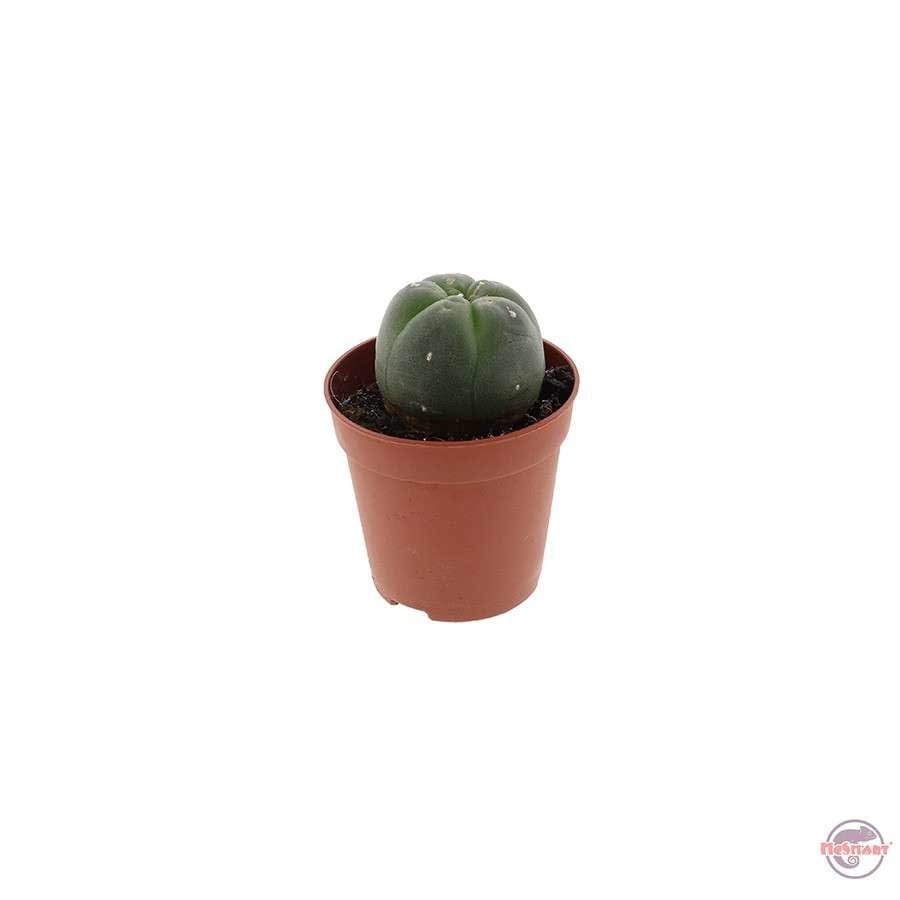
1. Peyote cactus 2 — 3 cm
A 2–3 cm Lophophora williamsii button is not a garden-centre plant. It represents roughly five years of slow greenhouse cultivation from seed, and to anyone who understands what that means, the appeal needs no explanation. There is no way to hurry it.
Every plant leaves us bare-root. That is deliberate: soil holds moisture, moisture in transit rots roots, and shipping the taproot dry is the single most effective thing we can do to make sure your seedling arrives in genuinely good condition rather than merely alive.
At this size it is a seedling with all its establishment ahead of it, which makes the first fortnight after it arrives more important than anything you will do for it in the following year. Section 3 is that fortnight, step by step.
Legal status: Live Lophophora williamsii may legally be owned and cultivated as an ornamental plant in the Netherlands, Germany and the UK. Preparing, extracting or consuming it is prohibited, because the plant contains mescaline. We sell these specimens for ornamental collection, botanical study and conservation, and for nothing else. The species is listed on CITES Appendix II.
2. Specifications
| Specification | Detail |
|---|---|
| Scientific name | Lophophora williamsii — spineless, bluish-green button cactus |
| Diameter | 2 to 3 cm |
| Approximate age | Around 5 years, seed-grown under greenhouse conditions |
| Price | €12.95 |
| Provenance | 100% seed-grown in legal nurseries, never wild-collected |
| Substrate | 90% mineral (pumice, perlite, coarse lava rock) to 10% organic loam |
| Pot | Deep terracotta with generous drainage |
| Temperature | 18 °C to 30 °C in active growth |
| Light | Bright but indirect — a curtained south window or an LED on a timer |
| Watering | Only when bone-dry; roughly every 2 to 3 weeks in summer |
| Winter | Below 10 °C bring it indoors and stop watering entirely |
| Settling-in | No water for the first 7 to 10 days after potting |
| Shipping | Bare-root, shock-absorbing discreet packaging, live arrival guarantee |
3. Unboxing and potting, step by step
- Unpack carefully. Lift the seedling out of its transit wrapping and look it over: the taproot should be dry and firm, the button bluish-green. Light pressure marks from the journey are normal.
- Mix the substrate before you go further. Fill a deep terracotta pot with a blend of about 90% mineral material — pumice, perlite and gritty red lava rock — and only 10% organic loam. This one decision prevents most root rot before it can start.
- Set the plant in. Make a well in the centre of the mix, feed the taproot down into it without bending it, and firm the substrate gently around the base of the button so it sits steady.
- Then leave it alone for 7 to 10 days. No water at all. The pause lets micro-tears in the root surface from transit close over before moisture reaches them.
- First watering. Water thoroughly until it drains from the bottom — and then wait until the substrate is completely bone-dry before you do it again.
4. Cultivation and long-term care
4.1 Light
Bright but indirect is the target, and at this size that is not a soft recommendation. A 2–3 cm seedling sunburns faster than most people expect, and harsh midday sun can scorch the epidermis before there is any visible warning. A south-facing window behind a sheer curtain works well; so does an LED grow light on a timer. Watch the colour: a shift from green towards reddish-purple means more light than the plant can process, and it is your cue to move it back.
4.2 Temperature and dormancy
Keep it between 18 °C and 30 °C through spring and summer — warm enough to echo the Chihuahuan Desert, without extreme spikes. When the ambient temperature drops below 10 °C, bring it inside and stop watering completely. Lophophora depends on that cold dry rest. Keeping it warm and watered all year is one of the more reliable ways to shorten its life; the dormancy is part of the biology, not an interruption to it.
5. Legal status and ethical sourcing
Wild peyote populations in the Chihuahuan Desert — northern Mexico and southern Texas — are under sustained pressure from habitat loss, development and commercial poaching. A wild plant of collectable size represents a decade or more of undisturbed desert growth that cannot be replaced at the rate it is taken. Every specimen we ship was germinated and raised in a nursery. That distinction is the whole ethical case for buying cultivated stock.
Five years of growth arrived in a padded envelope. Do not water it for the first week — that pause is the whole difference between a plant that establishes and one that rots.
- A 2 to 3 cm Lophophora williamsii button, around five years old, grown from seed.
- Seed-grown in a legal European nursery, never taken from the wild.
- Shipped bare-root and soil-free in discreet, shock-absorbing packaging, with a live arrival guarantee.
- Substrate: roughly 90% mineral to 10% organic. Deep, unglazed terracotta with open drainage.
- Leave it dry for the first week or two after potting, then water soak-and-dry.
- Complete winter dormancy from October: cool, frost-free and no water at all.
- Legal to own and grow as an ornamental in NL, DE and UK. Extraction and consumption are not. CITES Appendix II.
- Order before 16:00 on weekdays for same-day dispatch in plain, unmarked packaging.
 Premium ingredients for optimal results