

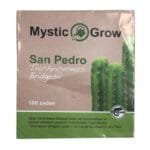
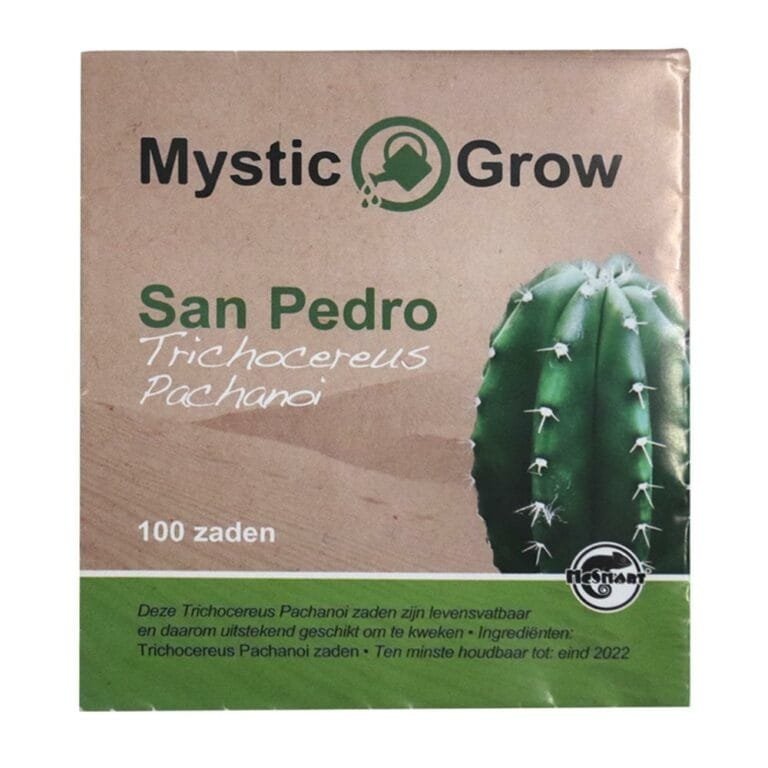
1. San Pedro T. pachanoi seeds — 100 pieces
A hundred seeds of Trichocereus pachanoi — the classic San Pedro, also classified as Echinopsis pachanoi. When somebody says San Pedro without qualifying it, this is the plant they mean. It contains mescaline, and it is the easiest of the mescaline cacti to grow.
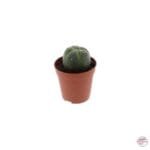
It is a bright mid-green column with six to eight shallow ribs and almost no spines — small brown nubs where its Peruvian and Bolivian cousins carry needles. That makes it the most handleable of the three, and it is also the fastest grower, which is why pachanoi is what nurseries propagate and what most collections start with.
Andean use of San Pedro cacti is one of the oldest documented relationships between people and a psychoactive plant anywhere: carved stone reliefs at Chavín de Huántar in the Peruvian highlands depict it in ceremonial context around three thousand years ago, and healers in northern Peru still use it today. The Spanish name arrived with the colonial period.
Legal status: Mescaline is a controlled substance in the Netherlands and most other countries. Trichocereus seeds and living plants are sold legally as ornamental horticulture, which is what these are; extracting or preparing mescaline from them is not legal. Check your local law before ordering.
2. Specifications
| Specification | Detail |
|---|---|
| Product name | San Pedro T. Pachanoi seeds – 100 pieces |
| Species | Trichocereus pachanoi (syn. Echinopsis pachanoi) |
| Common name | San Pedro |
| Contents | 100 seeds |
| Price | €14.17 |
| Appearance | Bright mid-green, 6 to 8 ribs, effectively spineless |
| Native range | Andes of Peru and Ecuador |
| Alkaloid | Mescaline |
| Growth rate | The fastest of the three San Pedro types |
| Difficulty | The most forgiving mescaline cactus to grow from seed |
| Age restriction | 18+ only |
3. What goes wrong with cactus seedlings, and how to avoid it
Germinating San Pedro is easy. Keeping the seedlings alive through their first six months is where people lose them, and almost every loss has one of five causes. Sow on the surface of sterilised, free-draining soil, water from below with boiled or rainwater, cover, and hold at roughly 18 °C to 23 °C — then watch for these:
| What you see | What it means and what to do |
|---|---|
| White fuzz on the soil or around a seedling | Mould, and the commonest killer. It comes from unsterilised soil, tap water or too little air movement. Increase ventilation immediately, remove affected material, and use boiled or rainwater from now on. |
| A seedling collapses at soil level | Damping off — a fungal problem, same root causes. Nothing saves an affected seedling, but ventilating and drying the surface protects the others. |
| Green film across the soil surface | Algae. Harmless in itself and a sign of too much light on wet soil. Water from below rather than over the top. |
| Seedlings turn red or purple | Too much light for their stage. Move them back from the window. It is reversible. |
| Yellowing and no growth | Too little light, or the seedling has been kept too wet for too long. Move it brighter and let the substrate dry properly between waterings. |
3.1 After the cover comes off
- Harden off gradually. Pierce a couple of holes in the film, add more every other day, and only remove it when the air under it matches the room.
- Water from below with boiled or rainwater. Stand the tray in a shallow layer and let the soil draw it up.
- Feed lightly in the growing season only. A dilute cactus fertiliser, nothing in winter.
- Keep them dry, bright and frost-free through winter. They stop growing; watering a dormant seedling is how they rot.
- Pot on at a few centimetres. Deep pots, sharp drainage, and take care with the root.
Expect attrition. A hundred seeds producing several dozen strong seedlings is a normal, good result, which is exactly why cactus seed is sold in hundreds rather than tens.
4. Before you consider using it
4.1 Preparation
- Have a sober sitter present. Someone who stays sober, stays in the room and knows what you have taken.
- Sit or lie down before you start. Do not stand, walk or handle anything.
- Clear the space. No open flames, no stairs, nothing breakable within reach.
- Have a trip stopper to hand. Knowing it is there matters even if you never use it.
- Nothing else alongside it. No alcohol, no cannabis, no other substance.
4.2 Do not use this if
- Not for anyone under 18.
- Not for anyone pregnant or breastfeeding.
- Do not use if you or a close family member has a history of psychosis, schizophrenia, bipolar disorder or another serious mental health condition. Psychedelics can precipitate episodes in people predisposed to them.
- Do not use alongside alcohol, cannabis, SSRIs, MAOIs or any prescription medication without medical advice.
- Do not drive or operate machinery for the rest of the day.
- Legality varies widely by country and changes. Check your local law before ordering.
- A mescaline experience commonly runs ten to twelve hours, with nausea frequently reported early on. It takes a whole day and part of the next.
- This is seed. Several years of growth stand between what arrives in the post and a plant of any size.
Germination is the easy part. Mould, tap water and stagnant air are what kill cactus seedlings — not cold, and not neglect.
- A hundred seeds of Trichocereus pachanoi, the classic San Pedro.
- The fastest-growing and most forgiving of the three mescaline cacti we stock.
- Bright green, six to eight ribs, effectively spineless — the easiest to handle.
- Sow on sterile soil at 18 to 23 °C, water from below with boiled or rainwater, ventilate well.
- Ceremonial use of San Pedro is documented at Chavín de Huántar around three thousand years ago.
- Sold as ornamental horticulture; mescaline is controlled. 18+ only.
- Order before 16:00 on weekdays for same-day dispatch in plain, unmarked packaging.
 Premium ingredients for optimal results