
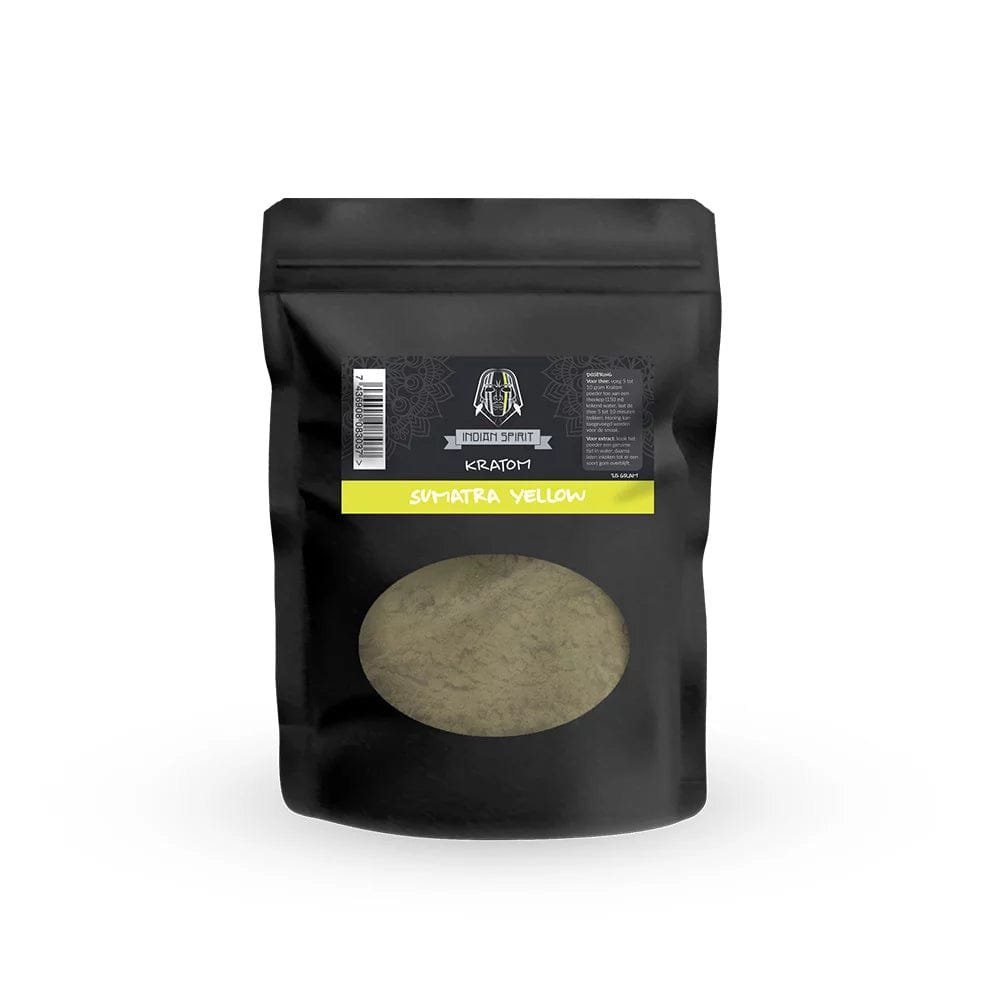
1. Indian Spirit Kratom — Sumatra Yellow, 25g / 50g
Loose Sumatra Yellow kratom powder from Indian Spirit, in 25-gram and 50-gram bags. Sumatran leaf, yellow processing — the combination of the island most associated with long duration and the processing most associated with smoothness.
Kratom is the leaf of Mitragyna speciosa. Its alkaloids act at the body’s opioid receptors, and the reported effect shifts direction as well as intensity with the amount.
Yellow is the least-explained label in the trade, so this page explains it properly rather than repeating that it “sits between green and red”.
Legal status: Mitragyna speciosa is legal to sell and possess in the Netherlands. It is banned or controlled in several other countries and remains under regulatory review in the EU and the United States. Check the law where you live before ordering.
2. Specifications
| Specification | Detail |
|---|---|
| Product name | Indian Spirit Kratom — Sumatra Yellow, 25g / 50g |
| Brand | Indian Spirit |
| Plant | Mitragyna speciosa |
| Vein type | Yellow |
| Strain | Sumatra Yellow |
| Form | Loose powder |
| Sizes | 25 grams and 50 grams |
| Commonly used as | A tea, 4 to 5 grams brewed |
| Onset | Around 15 minutes for a tea, lasting several hours |
| Storage | Airtight, cool, dry, out of light. Do not refrigerate |
| Age restriction | 18+ only |
3. Making yellow
There is no yellow vein on a kratom tree. Yellow is made, not harvested, and there are three recognised ways it gets made:
| Method | What happens |
|---|---|
| Extended drying | Leaf is dried for longer than usual, often with more or less light exposure than the standard process for its vein colour. Time and light both alter the alkaloid profile. |
| Fermentation | Leaf is held under conditions that allow controlled fermentation before or during drying — the same broad idea as the difference between green and black tea, applied to a different plant. |
| Blending | Dried green and dried red leaf mixed in proportion. A perfectly legitimate product and a completely different thing from a processing designation, sold under the same word. |
3.1 Why that matters practically
- Two yellows may have nothing in common. A fermented green and a green-red blend are not the same product, and both are sold as yellow.
- Which makes yellow the least standardised label in a trade with no standards. That is worth knowing before you assume a yellow you liked elsewhere will match this one.
- The consistent thread in the reporting is smoothness and duration — less sharpness than a white, less weight than a red, and a longer plateau than either. That description recurs regardless of which production method is behind it.
- So buy 25 grams first, and if it suits you, buy more of the same source rather than yellow in general.
3.2 The Sumatran half
Sumatran material is separately described as long-lasting, so the two attributes here point the same way. If what you want is something that holds steady through an afternoon rather than peaking and fading, this combination is what the reporting points at — with the usual caveat that none of it has been established in a controlled setting.
4. Using it
4.1 Brewing it
- Weigh it. Four to five grams is the usual starting range. A level teaspoon can be anywhere between two and four grams depending on the grind, so a 0.1 g scale is worth the few euros.
- Stir it into hot water, not boiling. A mug is enough.
- Add honey. Kratom is genuinely bitter and this is the main reason people abandon loose powder.
- Drink the sediment too, or strain it and accept losing a little.
- Wait a full hour before deciding it has not worked. Effects commonly begin around fifteen minutes in.
4.2 25 grams — the trial size
Twenty-five grams is around five to six sessions at a typical amount, which is exactly the right quantity for answering one question: does this strain suit me?
- Enough to judge it properly. One session tells you very little — how you slept, what you ate and what sort of day it was all colour a single result. Five or six gives you a real impression.
- Small enough to be no loss if it does not. Strain preference is genuinely individual and nobody gets it right first time.
- The sensible way to explore. Buy two or three 25-gram bags of different strains rather than one large bag of a strain you have not tried.
- Keep notes. Strain, amount, time of day, how it went. Across three strains that record is the only thing that will actually tell you which you prefer.
- Then buy the 50-gram bag of the one that worked, which is what the size is there for.
5. Cautions
- Not for anyone under 18, pregnant or breastfeeding.
- Kratom acts on the body’s opioid receptors. Regular use can lead to tolerance, dependence and withdrawal — this is well documented and is the single most important thing to know before starting.
- Do not combine with alcohol, sedatives, opioid medication or other central nervous system depressants. This combination is where serious harm occurs.
- Do not use if you have heart, lung, liver or kidney problems, high or low blood pressure, or diabetes, without medical advice.
- Do not drive or operate machinery after use.
- Kratom is restricted or banned in several European countries and under active regulatory review elsewhere. Check your local law before ordering.
- Keep out of reach of children and pets.
Yellow is made, not harvested. Extended drying, fermentation and blending all produce it, and they are not the same product.
- Loose Sumatra Yellow Mitragyna speciosa powder from Indian Spirit, in 25g and 50g bags.
- There is no yellow vein on the plant — yellow is produced by drying, fermentation or blending.
- Which makes it the least standardised label in a trade that has no standards.
- Both Sumatran leaf and yellow processing are associated with a longer, smoother plateau.
- Buy 25 grams first, and if it suits you buy more of the same source rather than yellow in general.
- Brew 4 to 5 grams as a tea, weighed. Acts at opioid receptors. 18+ only.
- Order before 16:00 on weekdays for same-day dispatch in plain, unmarked packaging.
 Premium ingredients for optimal results