

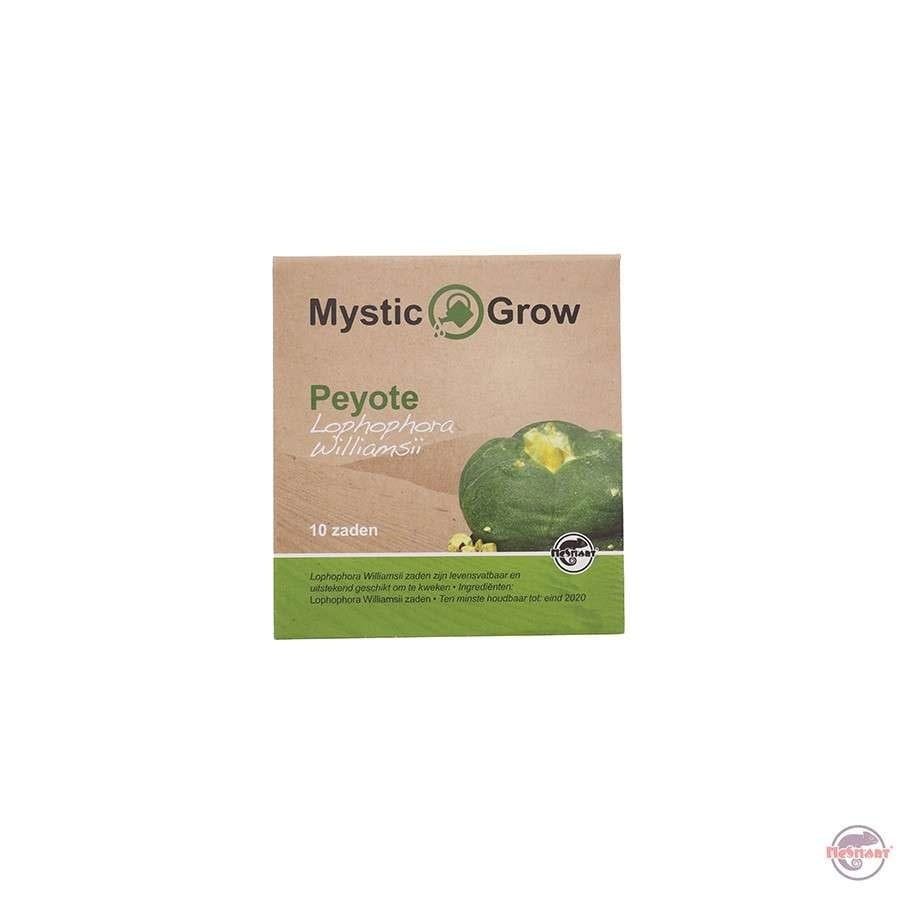
1. Peyote L. williamsii seeds — 10 seeds
Ten seeds of Lophophora williamsii, the peyote cactus — a small, spineless, button-shaped cactus native to the Chihuahuan Desert of northern Mexico and southern Texas. It contains mescaline, and at a higher concentration by dry weight than any of the columnar San Pedro species: typically a few per cent, against a fraction of one per cent for Trichocereus.
Its ceremonial history is long and well documented. Archaeological finds put human use back several thousand years, and it remains central to the practice of Huichol (Wixárika) communities in Mexico and to the Native American Church in the United States, where its use is legally protected for members. It is not a recreational plant in any of those traditions.
These are seeds, sold for cultivation, and the honest thing to say about them is in section 3: growing peyote from seed is a project measured in years rather than seasons.
Legal status: Mescaline is a controlled substance in the Netherlands and in most other countries. The seeds and living plants of mescaline-containing cacti are generally sold legally as ornamental horticulture, and that is what we sell them as — but extraction or preparation of mescaline from them is illegal. In addition, Lophophora williamsii is listed on CITES Appendix II, so international movement of the plant is separately regulated. Check the law where you live before ordering.
2. Specifications
| Specification | Detail |
|---|---|
| Product name | Peyote L Williamsii seeds – 10 seeds |
| Species | Lophophora williamsii |
| Family | Cactaceae |
| Contents | 10 seeds |
| Price | €10.55 |
| Native range | Chihuahuan Desert — northern Mexico and southern Texas |
| Form | Small, spineless, button-shaped, slow-growing |
| Alkaloid | Mescaline, at a higher dry-weight concentration than Trichocereus species |
| CITES | Appendix II |
| Germination temperature | Roughly 18 to 23 °C |
| Age restriction | 18+ only |
3. Growing peyote is a ten-year project
This is the part most listings leave out. Lophophora williamsii is among the slowest-growing cacti in cultivation, and anyone buying seed should know the timescale before they start:
- Germination is the fast part. Days to a few weeks, and it is genuinely satisfying.
- Then almost nothing happens for a long time. A seedling may take two or three years to reach the size of a fingernail.
- A mature button takes a decade or more from seed. Wild plants of any size are typically far older than they look, which is precisely why the species is under collection pressure and CITES-listed.
- Grafting is how growers speed it up. Grafting a seedling onto a fast-growing rootstock is a standard technique in the hobby, and it turns years into months.
- It will not survive neglect or a cold windowsill. Bright light, sharp drainage, and no water at all through winter dormancy.
3.1 Sowing them
- Sterilise everything. Cactus seedlings are lost to mould far more often than to anything else. Use sterilised or baked soil and clean trays.
- Sow on the surface. Fill shallow trays with a free-draining mix, place the seeds on top and press them gently in. Do not bury them — they need light to germinate.
- Water from below with boiled or rainwater. Stand the tray in a shallow layer and let the soil draw moisture up until the surface is damp. Tap water encourages algae.
- Cover and keep warm. Cling film or a propagator lid, held between roughly 18 °C and 23 °C. Green specks appear anywhere from a few days to a few weeks later.
- Harden off gradually from about four weeks. Pierce two holes in the film, then a couple more every other day, until the humidity inside matches the room. Remove it only then.
- Do not let them dry out, and do not drown them. Overwatering is the more common mistake once the cover is off.
- Read the colour. Yellowing means not enough light; a red or purple flush means too much sun or too little water.
If you want a mescaline cactus growing on your windowsill in a reasonable timeframe, a Trichocereus species is the honest recommendation — San Pedro grows many times faster. Peyote is for people who want Lophophora williamsii specifically, and are content to wait.
4. Before you consider using it
4.1 Preparation, if you ever get that far
- Have a sober sitter present. Someone who stays sober, stays in the room and knows what you have taken.
- Sit or lie down before you start. Do not stand, walk or handle anything.
- Clear the space. No open flames, no stairs, nothing breakable within reach.
- Have a trip stopper to hand. Knowing it is there matters even if you never use it.
- Nothing else alongside it. No alcohol, no cannabis, no other substance.
4.2 Do not use this if
- Not for anyone under 18.
- Not for anyone pregnant or breastfeeding.
- Do not use if you or a close family member has a history of psychosis, schizophrenia, bipolar disorder or another serious mental health condition. Psychedelics can precipitate episodes in people predisposed to them.
- Do not use alongside alcohol, cannabis, SSRIs, MAOIs or any prescription medication without medical advice.
- Do not drive or operate machinery for the rest of the day.
- Legality varies widely by country and changes. Check your local law before ordering.
- Mescaline experiences are long — commonly ten to twelve hours — and nausea in the early hours is routinely reported. Clear the whole day and the one after it.
- Peyote is a sacred plant to living communities. If that matters to you, it is worth knowing that wild collection for the trade is the main threat to the species.
A peyote button the size of a coin can be a decade old. That is the whole reason the species is CITES-listed.
- Ten seeds of Lophophora williamsii, the peyote cactus, for cultivation.
- Contains mescaline at a higher dry-weight concentration than San Pedro species.
- Sacred to Huichol communities in Mexico and to the Native American Church in the United States.
- Extremely slow-growing: a mature button takes ten years or more from seed. Grafting is how growers shorten that.
- Sow on the surface of sterile soil at 18 to 23 °C, water from below, harden off from four weeks.
- Seeds sold as ornamental horticulture. Mescaline is controlled; the species is CITES Appendix II. 18+ only.
- Order before 16:00 on weekdays for same-day dispatch in plain, unmarked packaging.
 Premium ingredients for optimal results