Herbal Remedies vs Synthetic Supplements: Benefits, and Choosing What’s Best
Walk into any health store or browse online wellness retailers, and you’ll find yourself facing a dizzying array of bottles,

Ordered before 5pm = Shipped today

Discreet Shipping & Transactions

Proven and tested effectiveness
The Netherlands has long been associated with progressive drug policies, but when it comes to psychedelics, the reality is more nuanced than many visitors expect. While Amsterdam’s smartshops openly sell magic truffles and the country maintains its famous tolerance toward cannabis, most psychedelic substances remain strictly prohibited under Dutch law. Recent legislative changes in 2025 have made the legal landscape even more complex, particularly with new restrictions targeting designer drugs and synthetic psychedelics.
Understanding these laws is essential for anyone interested in psychedelics in the Netherlands, whether you’re a tourist planning a visit, a wellness seeker exploring legal options, or simply curious about how one of Europe’s most liberal countries regulates these substances. This guide breaks down the current legal framework, explains what’s actually legal (and what isn’t), and provides practical advice for staying safe and within the law.
The Opium Act (Opiumwet) forms the backbone of all drug regulation in the Netherlands. This legislation divides controlled substances into distinct categories, each with different legal consequences and enforcement priorities.
List I covers what Dutch law considers “hard drugs.” This includes all classic psychedelics: LSD, psilocybin mushrooms (banned since 2008), DMT, ayahuasca, mescaline-containing cacti like peyote and San Pedro, and ketamine. Possession, sale, production, or import of these substances carries serious legal penalties, with no exceptions for personal use, religious ceremonies, or therapeutic purposes.
List II encompasses “soft drugs,” primarily cannabis products (marijuana and hashish) along with certain sedatives. While technically illegal, cannabis enjoys a unique tolerated status in the Netherlands. Licensed coffee shops can sell small amounts (up to 5 grams for personal possession), though cultivation and wholesale supply remain in a legal gray area.
The newest addition, List IA, was introduced in July 2025 specifically to address new psychoactive substances (NPS), often called “designer drugs.” Rather than banning individual chemicals one at a time (which allowed manufacturers to stay ahead of the law by slightly modifying molecular structures), List IA takes a “generic” approach. Entire categories of synthetic compounds, including synthetic cathinones, cannabinoids, and ecstasy analogues, now fall under this blanket prohibition. This legislative shift effectively closed the loopholes that allowed “legal highs” to flourish in previous years.
Penalties under the Opium Act reflect the seriousness with which Dutch authorities treat drug violations. For List I substances, trafficking, production, or import can result in prison sentences ranging from four to twelve years and fines up to €82,000. Even small-scale possession carries financial penalties between €90 and €500, along with the risk of a criminal record. List IA violations can lead to up to three years imprisonment and similar maximum fines. The Netherlands maintains what officials call “zero tolerance” for psychedelics, meaning even small amounts intended for personal use can trigger prosecution.
For visitors and residents alike, understanding which psychedelics are actually legal requires looking beyond general perceptions of Dutch drug tolerance.
Psilocybin mushrooms have been completely illegal since December 2008, when they were moved to List I following several incidents involving tourists. Any form of psilocybin-containing mushroom, fresh or dried, is prohibited. Possession, sale, or cultivation carries the same penalties as other hard drugs.
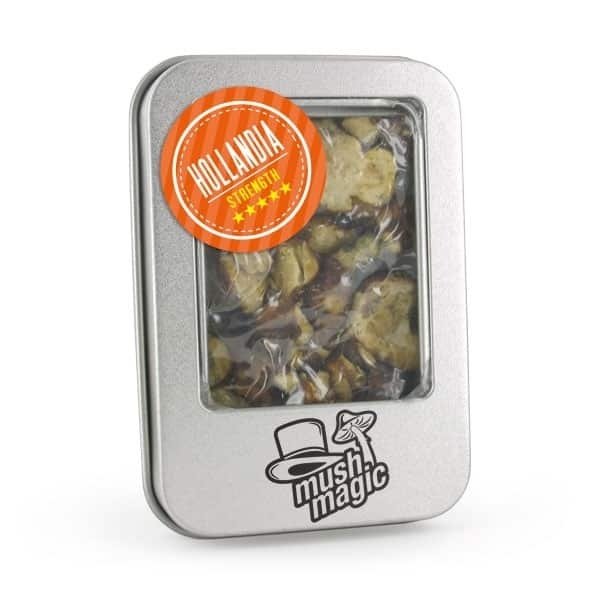
Magic truffles (sclerotia), however, remain legal through what’s effectively a botanical loophole. Truffles are the underground storage structures (technically “sclerotia”) of the same fungi that produce psilocybin mushrooms above ground. Because the 2008 ban specifically targeted mushroom fruiting bodies and Dutch law requires precise definitions, truffles weren’t included in the prohibition. They must be sold whole and intact; processing them into other forms could be considered manufacturing a controlled substance. Since 2019, truffle sales have been subject to standard 21% VAT, reflecting their legitimization as a commercial product. Licensed smartshops throughout the Netherlands, particularly in Amsterdam, sell truffles openly and legally.
LSD and its analogues fall squarely under List I, with the 2025 List IA amendments now also capturing newer synthetic variants. The days of “research chemical” LSD substitutes existing in legal gray areas are over.
DMT in all forms, including ayahuasca brews, is strictly prohibited. Unlike some jurisdictions that recognize religious or sacramental exceptions for ayahuasca use, Dutch courts offer no such accommodation. Any ceremony, retreat, or personal use involving DMT-containing substances violates List I and will be prosecuted accordingly.
Mescaline-containing cacti present an interesting case. Both the extracted mescaline compound and the cacti themselves (peyote, San Pedro, Peruvian torch) are illegal under Dutch law. This differs from some countries where the cacti may be legal for ornamental purposes but preparing them for consumption is not.
Ketamine has become a particular focus of Dutch law enforcement. With annual prevalence rates of 3.2% among young adults (the highest in Europe), and over 1,300 treatment admissions in 2023 alone, authorities view ketamine as a significant public health concern. It’s firmly classified under List I, with increasing enforcement attention at nightlife venues and festivals.
Psilocybin spores and cultivation kits occupy a curious legal space. Spores and grow kits for psilocybin mushrooms are legal to purchase and possess. However, actually using these kits to cultivate mushrooms is illegal, as cultivation constitutes production of a controlled substance. This creates a legal paradox where the tools are permitted but their intended use is not. Smartshops can legally sell these products, but buyers who use them for their obvious purpose face prosecution.
The introduction of List IA in July 2025 represents the most significant change to Dutch drug law in recent years, fundamentally altering the landscape for synthetic psychedelics and new psychoactive substances.
For years, manufacturers of designer drugs exploited a legal loophole: by making small chemical modifications to banned substances, they could create new compounds with similar effects but different molecular structures. By the time authorities identified and scheduled a specific substance, manufacturers had already moved on to the next variation. This cat-and-mouse game led to an explosion of NPS availability, particularly synthetic cathinones like 3-MMC, which became widespread in Dutch nightlife.
The 2023 health crisis made clear that the old approach wasn’t working. That year saw 301 reported poisonings and 763 adverse events related to NPS, with 3-MMC and similar cathinones driving most incidents. Emergency rooms struggled with users experiencing severe side effects from substances that were technically legal or existed in regulatory limbo.
List IA changed the rules entirely. Rather than targeting individual molecules, the new legislation bans entire chemical families. Synthetic cathinones as a class, synthetic cannabinoids as a class, and various ecstasy analogues as a class all became illegal overnight. This “generic scheduling” approach means that creating a new variant within these families doesn’t circumvent the law anymore.
The impact has been dramatic. Enforcement agencies report an approximately 80% reduction in NPS availability since List IA took effect. More importantly, health data shows a 60% decline in NPS-related hospitalizations, according to the Trimbos Institute’s monitoring. What were once quasi-legal “party drugs” sold in head shops and online now carry serious criminal penalties: up to three years imprisonment and fines reaching €82,000.
For anyone interested in psychedelics in the Netherlands, this means the era of “legal alternatives” has definitively ended. Substances marketed as legal substitutes for LSD, psilocybin, or other classical psychedelics now almost certainly fall under either List I or List IA prohibitions.
One of the most common misconceptions among tourists visiting the Netherlands is that the country’s famously tolerant approach to cannabis applies equally to other drugs. This misunderstanding can lead to serious legal trouble.
The Dutch cannabis model operates under a policy called gedoogbeleid, often translated as “tolerance policy.” Under this framework, licensed coffee shops can sell cannabis products, and personal possession of up to 5 grams is decriminalized (though still technically illegal). Police generally don’t prosecute small-scale possession, and the coffee shop system has operated openly for decades. This pragmatic approach aims to separate the soft drug market from hard drug markets and keep cannabis users out of contact with more dangerous substances.
This tolerance emphatically does not apply to psychedelics. With the sole exception of magic truffles sold through licensed smartshops, all psychedelic substances are subject to strict enforcement. There are no possession thresholds, no overlooked personal use, and no tolerance zones. Police can and do prosecute for any amount of LSD, psilocybin mushrooms, DMT, mescaline, or ketamine.
Local regulations add another layer of complexity. While national law sets the framework, municipalities retain significant control over implementation. Some cities restrict smartshop operating hours or limit their locations to certain neighborhoods. Amsterdam, as the primary tourist destination, maintains more permissive local rules, but even there, regulations exist to prevent disturbances and ensure public safety.
Tourists face particular risks. The same penalties that apply to Dutch residents apply to visitors. Police conduct checks at popular nightlife venues, festivals, and transportation hubs, including Schiphol Airport. Foreign nationals convicted of drug offenses not only face fines and potential imprisonment but also risk expulsion from the Netherlands and entry bans that can extend across the entire Schengen Area. A drug conviction in the Netherlands can prevent you from traveling freely throughout much of Europe.
The message is clear: don’t assume that the relaxed attitude toward cannabis means the Netherlands is permissive about psychedelics. Outside of legal truffle purchases, enforcement is serious and consequences are real.
Despite strict laws around most psychedelics, the Netherlands maintains a robust infrastructure for harm reduction and drug safety that’s unusual by international standards.
Smartshops are retail establishments licensed to sell magic truffles, psilocybin spores, grow kits, and various paraphernalia. Concentrated in Amsterdam but found in other Dutch cities, these shops operate legally and pay standard business taxes. Unlike the quasi-legal status of some coffee shops, smartshops selling truffles are fully above-board commercial operations.
What distinguishes reputable smartshops is their commitment to customer education and safety. Staff members typically receive training in proper dosing, set and setting, potential risks, and how to respond to difficult experiences. Many shops provide written information about their products, including psilocybin content estimates and recommended doses for different experience levels. This professionalization of the truffle market reflects a harm reduction philosophy: if people are going to use psychedelics, it’s better they do so with accurate information and safe products than through unregulated black markets.
Psychedelic retreats present a more complicated legal picture. The Netherlands has seen growth in “truffle retreat” businesses offering guided psychedelic experiences in group settings, often framed around wellness, personal growth, or spiritual exploration. These operations exist in a legal gray zone. Since truffles themselves are legal, and facilitating their use isn’t explicitly prohibited, some retreat centers have operated for years without interference.
However, these retreats enjoy no official government approval or oversight. Authorities can shut them down at any time, particularly if they advertise aggressively, if safety concerns arise, or if they begin incorporating illegal substances. Anyone considering a truffle retreat should understand that these services carry inherent legal uncertainties. There are no government-sanctioned psychedelic therapy programs in the Netherlands as of 2025.
The broader harm reduction infrastructure in the Netherlands is genuinely impressive. Organizations like the Trimbos Institute, Jellinek, and Unity provide drug testing, education, and crisis intervention services. At festivals and nightlife venues, testing booths allow people to anonymously verify what substances they have, with expert staff explaining contents, purity, and risks. This “drug checking” service aims to prevent overdoses and poisonings by giving users accurate information.
The Drug Info Line (0900-1995) offers telephone support and advice about substance use, effects, and risks. Outreach workers at clubs and events provide immediate assistance to people experiencing adverse reactions. These services don’t endorse drug use but recognize that people will use substances regardless, and providing support reduces harm.
This harm reduction culture reflects a fundamentally different approach to drug policy than prohibition-focused models: rather than treating all use as criminal behavior to be punished, the Dutch system attempts to minimize negative health and social consequences while maintaining legal prohibitions on most substances.
Understanding the real-world impact of these laws requires looking at actual usage patterns and health outcomes in the Netherlands.
Ketamine use has emerged as a significant concern for Dutch health authorities. With 3.2% of young adults (ages 15-34) reporting ketamine use in the past year, the Netherlands has the highest prevalence in the European Union. This isn’t recreational use limited to weekend parties; in 2023 alone, Dutch addiction treatment centers recorded 1,329 admissions primarily related to ketamine. The drug’s increasing availability and relatively low cost compared to cocaine or MDMA have contributed to this trend. Law enforcement has responded with enhanced surveillance at nightlife venues and targeted operations against ketamine trafficking networks.
New psychoactive substances experienced a dramatic arc: explosion, crisis, then sharp decline. The years leading up to 2025 saw widespread NPS use, particularly 3-MMC (a synthetic cathinone often called “cat” or “drone”). The Trimbos Institute documented 301 acute poisonings and 763 adverse events related to NPS in 2023. Emergency departments reported users presenting with severe symptoms: extreme agitation, cardiovascular problems, hyperthermia, and psychiatric episodes.
The introduction of List IA in mid-2025 fundamentally changed this trajectory. Within months, NPS availability plummeted. The 60% reduction in NPS-related hospitalizations represents one of the most successful rapid interventions in Dutch drug policy history. The black market for these substances hasn’t disappeared entirely, but the combination of criminalization and public awareness about dangers has significantly reduced use.
Magic truffle tourism continues to grow, though precise numbers are difficult to establish. Amsterdam remains the epicenter, with dozens of smartshops catering to both tourists and locals. The truffle market benefits from international interest in psychedelics for wellness and personal development, positioning itself at the intersection of legal access and the global “psychedelic renaissance.” Smartshop operators report steady year-over-year growth in sales, driven by both first-time visitors and return customers.
Law enforcement priorities have shifted in response to these trends. While major trafficking operations always receive attention, routine enforcement now particularly targets illegal retreats operating outside the truffle loophole, production facilities for banned psychedelics, and tourist-focused smuggling. Police maintain high visibility at festivals and nightlife events, using drug-detection dogs and conducting searches. The message to both residents and tourists is consistent: the Netherlands will prosecute psychedelic offenses seriously.
If you’re planning to visit the Netherlands and are interested in psychedelics, here’s what you absolutely need to know.
Truffles are the only legal psychedelic option. You can purchase them from licensed smartshops if you’re over 18 (some shops require 21+). They must be consumed as whole truffles; any processing into other forms risks violating the law. Choose established, reputable smartshops rather than informal sellers. Legitimate shops will provide information about dosing, effects, and safety.
All other psychedelics are strictly illegal for tourists. It doesn’t matter if you have a prescription from your home country, if you claim religious use, or if you’re “just curious.” LSD, psilocybin mushrooms, DMT, ayahuasca, mescaline, and ketamine are prohibited. Possession, even of small amounts, can result in fines, prosecution, and expulsion. Don’t assume that because you’re a foreigner, authorities will give you a warning and send you on your way. They won’t.
Never attempt to travel with psychedelics. This includes truffles. While legal to purchase and possess within the Netherlands, truffles become illegal the moment you try to transport them across any border, including within the European Union and Schengen Area. Airport security at Schiphol actively screens for drugs, and being caught with any psychedelic substance, even legally purchased truffles, will result in confiscation at minimum and potential prosecution. Neighboring countries like Germany, Belgium, and France have much stricter drug laws than the Netherlands, and penalties can be severe.
Spores and grow kits are legal to buy but illegal to use. If you purchase mushroom cultivation kits or spores, do not actually grow mushrooms with them. Cultivation constitutes production of a controlled substance. These items are sold for novelty or educational purposes under Dutch law; using them as intended breaks that legal fiction.
Police conduct regular checks. Don’t assume you can use illegal psychedelics discreetly at clubs, festivals, or hotels without risk. Authorities maintain active enforcement, particularly in tourist-heavy areas and nightlife districts. Drug-detection dogs are common at large events, and security staff often work with police.
If you want to experience psychedelic therapy or attend a retreat, understand the legal risks. No government-approved psychedelic therapy exists in the Netherlands. Truffle retreats operate without official oversight and could be shut down. If you choose to participate, you do so at your own legal risk. Verify that any retreat uses only legal truffles, not illegal mushrooms or other substances.
Consult official harm reduction resources. Before using any psychedelic, even legal truffles, check resources from the Trimbos Institute, Jellinek, or DrugsInfo.nl. These organizations provide current safety information, dosing guidelines, and advice for reducing risks. If you experience problems, the Drug Info Line can provide support.
Keep your expectations realistic about “Dutch drug tolerance.” Yes, you can buy cannabis in coffee shops and truffles in smartshops. This doesn’t mean the Netherlands is a free-for-all where all drugs are acceptable. The country maintains serious enforcement of drug laws, particularly for hard drugs and psychedelics. Respect the legal boundaries that do exist.
Whether you’re a resident or visitor, following these guidelines will help you navigate Dutch psychedelic laws responsibly.
Only buy from licensed smartshops. These legitimate businesses clearly display their licenses, maintain regular hours, and employ knowledgeable staff. If someone approaches you on the street offering to sell psychedelics, they’re either selling illegal substances or scamming you. Avoid both.
Read product labels and ask questions. Reputable smartshops provide information about their truffle products, including estimated psilocybin content and recommended dosages. If you’re uncertain about anything, ask staff. They’d rather spend time educating you than have you experience problems.
Use truffles as purchased. Don’t attempt to dry them, powder them, extract from them, or otherwise process them. Consume them whole, as sold.
Never try to cultivate mushrooms, even if you legally purchased grow kits or spores. The legal fiction that allows these products to be sold depends on them not being used for their obvious purpose. Actually growing mushrooms crosses into illegality.
Don’t transport any psychedelics across borders. This point can’t be overstated. Even if you legally purchased truffles in Amsterdam, attempting to bring them to Germany, Belgium, or back to your home country is illegal. Don’t mail them, don’t pack them in luggage, don’t try to hide them. It’s not worth the risk.
Follow local municipal rules. If a smartshop can only operate during certain hours, don’t show up outside those times and expect service. Some areas prohibit public consumption of any intoxicating substances; respect these local ordinances.
If you’re uncertain about anything, consult official resources. The Trimbos Institute maintains updated information about substance effects and risks. DrugsInfo.nl provides practical harm reduction advice. These organizations exist to help people make safer decisions, not to judge or report drug use.
Don’t conflate cannabis tolerance with psychedelic tolerance. This is perhaps the single most important piece of advice for visitors. The fact that you can walk into a coffee shop and buy marijuana doesn’t mean psychedelics operate under similar rules. They don’t. Enforcement is much stricter, penalties are more serious, and there’s no tolerance policy protecting personal use.
The Netherlands finds itself in an interesting position regarding psychedelics. On one hand, the 2025 List IA amendments demonstrate authorities’ willingness to tighten controls and close loopholes, particularly around synthetic substances. The crackdown on designer drugs shows a government responsive to public health crises and willing to use strong enforcement measures.
On the other hand, the continued legality of magic truffles and the robust harm reduction infrastructure suggest an openness to pragmatic approaches that reduce harm rather than simply punishing all drug use. The smartshop system demonstrates that regulated psychedelic access is possible within a controlled legal framework.
International developments may influence Dutch policy in coming years. As jurisdictions like Oregon, Colorado, and several countries explore psychedelic-assisted therapy and legal reforms, and as research into therapeutic applications advances, the Netherlands may reconsider its approach. The country has historically taken a pragmatic view of drug policy, prioritizing health outcomes over moral positions.
For now, though, the legal status is clear. Truffles are legal, everything else is not, and the 2025 amendments have made enforcement stricter, not looser. Anyone interested in psychedelics in the Netherlands needs to understand these realities, respect the legal boundaries, and prioritize safety and legality in their choices.
The Dutch model offers a case study in the complexities of drug policy: progressive in some areas, strictly prohibitive in others, always attempting to balance individual freedoms with public health and safety. Understanding these nuances is essential for anyone navigating the psychedelic landscape in one of Europe’s most fascinating countries.
Walk into any health store or browse online wellness retailers, and you’ll find yourself facing a dizzying array of bottles,
The modern world has created a perfect storm for declining mental wellness. Between demanding careers, constant digital connectivity, and the
The supplement aisle can feel overwhelming. Rows of bottles promise better energy, sharper focus, stronger immunity, and improved wellness. With
You must be 18 years of age or older to view page. Please verify your age to enter.
Your access is restricted because of your age.