




What Is Salvia Divinorum and How Does It Work?

In the world of psychoactive plants, few species provoke as much curiosity and confusion as Salvia divinorum. This unassuming member of the mint family produces experiences so intense and alien that users often struggle to put them into words. Unlike the gentle euphoria of cannabis or the colorful visions of psilocybin mushrooms, Salvia catapults consciousness into territories that feel fundamentally disconnected from ordinary reality.
What makes this plant so unusual isn’t just the intensity of its effects, but the very mechanism through which it operates. While most hallucinogens work through serotonin pathways in the brain, Salvia divinorum follows an entirely different route, one that scientists are only beginning to understand. This distinctive pharmacology has captured the attention of neuroscientists, ethnobotanists, and consciousness researchers worldwide.
What Is Salvia Divinorum?
Salvia divinorum (Epling & Játiva) is a psychoactive plant species endemic to the cloud forests of the Sierra Mazateca in Oaxaca, Mexico. Belonging to the Lamiaceae family, which includes common herbs like mint, basil, and rosemary, this particular species stands apart as perhaps the most potent naturally occurring hallucinogen known to science when measured by mass.
The name itself offers clues to its nature: “Salvia” derives from the Latin salvare, meaning “to heal” or “to save,” while “divinorum” translates to “of the diviners” or “of the seers.” This nomenclature reflects the plant’s traditional role in Mazatec spiritual and healing ceremonies, where it has been used for generations to facilitate visions and divine insight.
What distinguishes Salvia divinorum from the roughly 1,000 other species in the Salvia genus is its production of salvinorin A, a trans-neoclerodane diterpenoid compound. This molecule represents something genuinely novel in psychopharmacology. It’s the first naturally occurring compound discovered to act as a highly selective kappa-opioid receptor agonist, a mechanism of action that sets it completely apart from classical psychedelics like LSD, psilocybin, or DMT, which primarily interact with serotonin receptors.
The plant has entered contemporary public and scientific discussions for several converging reasons. First, its legal status in many jurisdictions created a period of widespread experimentation, particularly among adolescents and young adults in the 2000s. Second, viral videos documenting intense Salvia experiences spread rapidly across early social media platforms, bringing the plant into mainstream awareness. Third, and perhaps most significantly, neuroscientists have become fascinated by salvinorin A’s unique receptor activity, seeing potential applications in pain management, addiction treatment, and understanding consciousness itself.
Origins and Botanical Profile
Deep in the cloud forests of Oaxaca’s Sierra Mazateca region, where mist clings to mountainsides and humidity saturates the air, Salvia divinorum thrives in its native habitat. This evergreen perennial grows naturally in shaded ravines and along stream banks, where it benefits from constant moisture and protection from direct sunlight. The plant typically reaches heights between 0.5 and 1.5 meters, though under optimal conditions it can grow somewhat taller.
The physical characteristics of Salvia divinorum reveal its membership in the Lamiaceae family. Like other mints, it produces square, hollow stems that provide structural support while remaining relatively lightweight. The stems are pale green and somewhat brittle, making them susceptible to damage from wind or rough handling.
The leaves are perhaps the plant’s most distinctive visual feature. Large and ovate-lanceolate in shape, they can reach lengths of up to 20 centimeters. The leaf margins are serrated, and the surfaces often have a soft, velvety texture due to fine hairs. These leaves grow in opposite pairs along the stem, a characteristic arrangement in the mint family. When crushed, fresh leaves release a subtle, somewhat bitter aroma distinct from the aromatic oils found in culinary sage species.
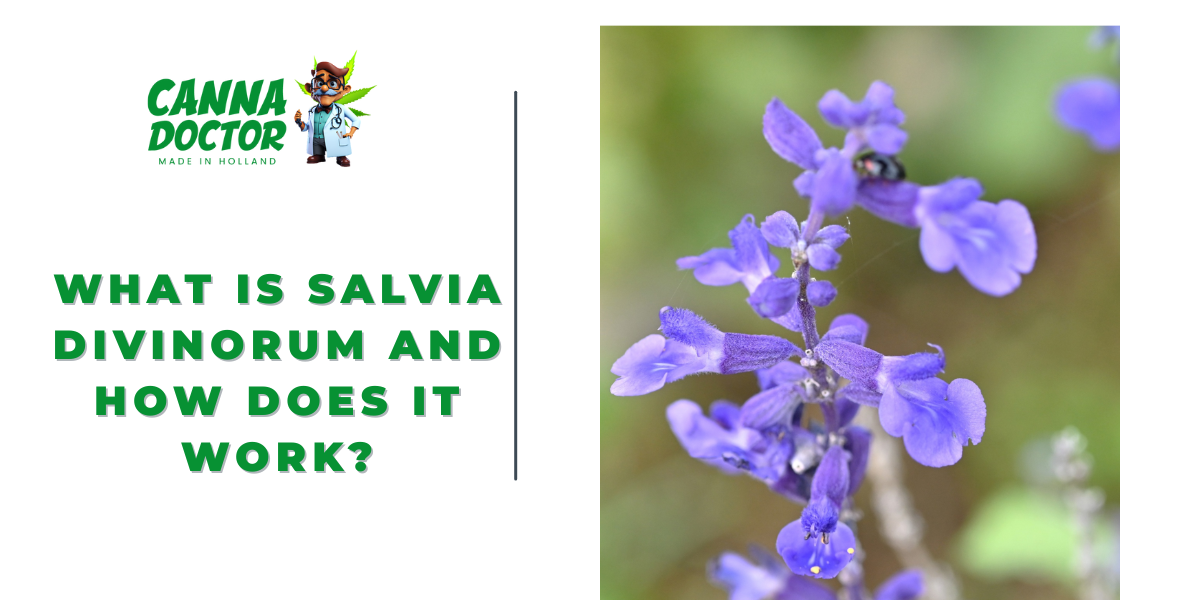
Salvia divinorum produces flowers that are white with a distinctive violet-blue calyx, creating an attractive if uncommon sight. The flowering occurs sporadically and represents one of the plant’s most peculiar characteristics: it almost never produces viable seeds. This near-complete sterility suggests that Salvia divinorum is what botanists call a true cultigen, a plant so thoroughly shaped by human cultivation that it has lost much of its reproductive capacity.
This reproductive peculiarity has profound implications. Because the plant rarely sets seed, propagation occurs almost entirely through vegetative means, specifically stem cuttings. Traditional Mazatec cultivators have maintained Salvia divinorum for generations by taking cuttings and allowing them to root in moist soil. This clonal propagation means that most Salvia divinorum plants worldwide are genetically nearly identical, descended from relatively few original specimens.
Molecular analysis has revealed that Salvia divinorum’s closest relative appears to be Salvia venulosa, a species found in Colombia. This relationship suggests a possible South American ancestry, though the precise wild origin of Salvia divinorum remains obscure. What is clear is that the plant has been under human cultivation in the Sierra Mazateca for so long that distinguishing truly wild populations from naturalized cultivated ones has become nearly impossible.
From its Mazatec homeland, Salvia divinorum has spread globally through ethnobotanical networks. Cuttings traveled first to botanical gardens and private collections, then to commercial nurseries and ethnobotanical suppliers. By the late 1990s and early 2000s, the plant had become widely available through online retailers, transforming it from an obscure ritual plant known to a handful of ethnobotanists into a globally accessible psychoactive species.
The Active Ingredient: Salvinorin A Explained
At the molecular heart of Salvia divinorum’s effects lies salvinorin A, a compound so unusual that its discovery fundamentally challenged assumptions about how plant-derived psychoactives function. This trans-neoclerodane diterpenoid represents something genuinely rare in nature: a powerfully psychoactive molecule that contains no nitrogen atoms.
Most psychoactive compounds from plants, whether caffeine, nicotine, morphine, cocaine, or DMT, are alkaloids characterized by nitrogen-containing structures. Salvinorin A breaks this pattern entirely. Its structure consists purely of carbon, hydrogen, and oxygen atoms arranged in a complex diterpene framework. This structural uniqueness initially made it difficult for researchers to predict how the molecule might interact with the nervous system.
The potency of salvinorin A is remarkable even among psychoactive compounds. When vaporized and inhaled, doses as low as 200-500 micrograms can produce threshold effects, with full experiences occurring at doses between 500-1500 micrograms. To put this in perspective, these are doses comparable to LSD in terms of mass, making salvinorin A one of the most potent naturally occurring psychoactive substances known.
This extraordinary potency means that plant material doesn’t need processing to be psychoactive, though extraction and concentration have become common. Dried Salvia divinorum leaves typically contain between 0.89 and 3.7 milligrams of salvinorin A per gram of leaf material, though potency varies with growing conditions, plant genetics, and harvest timing.
The market has responded to varying potency needs by producing standardized extracts. These concentrates are labeled with multipliers like 5x, 10x, 20x, or even 80x, theoretically indicating how many times more concentrated they are than plain leaf. A 10x extract, for example, is supposed to represent the salvinorin A content of ten grams of leaf compressed into one gram of material. However, these extracts are not always reliably standardized, and actual salvinorin A content can vary significantly between batches and suppliers.
Creating these extracts involves dissolving salvinorin A from plant material using solvents like acetone or ethanol, then concentrating the solution and applying it back onto a smaller amount of leaf material, which serves as a smokable carrier. The process concentrates the active compound while maintaining a plant matrix that can be easily vaporized.
What makes salvinorin A particularly intriguing from a pharmacological perspective is what it doesn’t do. Unlike LSD, psilocybin, and mescaline, it has no significant activity at serotonin 5-HT2A receptors, the primary target responsible for classical psychedelic effects. It doesn’t interact meaningfully with dopamine receptors like stimulants do, nor does it affect GABA receptors like alcohol or benzodiazepines. Instead, it operates through an entirely different mechanism, one that produces experiences qualitatively distinct from other categories of psychoactive substances.
How Salvia Works: Brain, Body, and Effects
The key to understanding Salvia divinorum’s unusual effects lies in a relatively obscure receptor system: the kappa-opioid receptor network. When salvinorin A enters the bloodstream and crosses the blood-brain barrier, it binds with remarkable selectivity to kappa-opioid receptors (KOR) distributed throughout the brain and nervous system. This selective binding distinguishes it from most other opioid-related compounds, which typically interact with multiple opioid receptor subtypes.
Kappa-opioid receptors play complex roles in regulating perception, mood, cognition, and the stress response. Unlike mu-opioid receptors, which mediate the euphoric and pain-relieving effects of morphine and similar compounds, kappa-opioid activation tends to produce dysphoric and dissociative states. When salvinorin A floods these receptors, it disrupts normal patterns of neural communication in brain regions associated with sensory processing, spatial awareness, and the sense of self.
The pharmacokinetics of salvinorin A explain the rapid onset and short duration of Salvia experiences. When vaporized leaf or extract is inhaled, the compound enters lung tissue and passes almost immediately into the bloodstream. Within 30 to 60 seconds, users typically report the first perceptual shifts. Peak effects arrive within 2 to 5 minutes, creating an intensity that can be overwhelming in its speed.
The experience itself defies easy categorization. Users commonly report sensations of being pulled or twisted through impossible geometries, merging with nearby objects, transforming into inanimate things, or experiencing complete dissolution of normal reality. The body may feel like it’s being compressed, stretched, or divided. Some describe the sensation of becoming a book being read, a gear in a machine, or a pattern on wallpaper. Laughter sometimes erupts uncontrollably, while others sit in silent awe or confusion.
Visual hallucinations, when they occur, tend toward geometric patterns, strange landscapes, or the sensation that the environment is peeling away to reveal hidden layers beneath. These aren’t typically the colorful, organic visions associated with psilocybin or ayahuasca, but rather have a mechanical or alien quality that users struggle to integrate with normal waking consciousness.
Motor coordination becomes significantly impaired during the peak experience. Users may be unable to stand or walk safely, and attempts to move can result in falls or collisions with objects. This physical incapacitation, combined with the mental disorientation, makes the presence of a sober sitter essential for safety.
The intensity peaks within 5 to 10 minutes and then begins to recede. By 15 to 20 minutes, most users have returned substantially to baseline awareness, though mild perceptual oddities and emotional effects may linger for up to 30 minutes. This rapid resolution distinguishes Salvia from longer-acting psychedelics, which can produce altered states lasting six to twelve hours or more.
Metabolism of salvinorin A occurs primarily in the liver, where enzymes break down the molecule relatively quickly. This rapid metabolic clearance contributes to the short duration of effects. Unlike many psychoactive substances, salvinorin A doesn’t accumulate in body tissues or produce extended metabolic byproducts that might prolong its action.
The aftereffects of a Salvia experience are typically mild. Some users report slight mental fog, emotional sensitivity, or a sense of disorientation that resolves within an hour. Unlike alcohol or stimulants, Salvia doesn’t produce a characteristic “hangover.” Most people return to completely normal functioning relatively quickly, though the memory of the experience often remains vivid and sometimes puzzling.
Comparing Salvia to other psychoactive substances highlights its unique profile. LSD and psilocybin produce experiences lasting 6-12 hours and 4-6 hours respectively, with gradual onsets and often more coherent, insight-oriented content. DMT, when smoked, has a duration similar to Salvia (10-20 minutes) but operates through serotonin receptors and tends to produce encounters with entities or geometric visual fields rather than Salvia’s body-distorting, reality-fragmenting effects. Ketamine and other dissociatives share some phenomenological similarities with Salvia but work through different receptor systems (primarily NMDA glutamate receptors) and have different duration and safety profiles.
The subjective quality of Salvia experiences often lacks the emotional warmth or spiritual insight that users report from serotonergic psychedelics. While some find value and even healing in Salvia journeys, many describe them as simply strange, confusing, or uncomfortable rather than enlightening. This qualitative difference likely relates to the distinct neurochemical pathways involved and suggests that kappa-opioid activation produces a fundamentally different alteration of consciousness than serotonin receptor modulation.
Traditional and Modern Uses
For the Mazatec people of Oaxaca, Salvia divinorum exists within a sophisticated framework of traditional medicine and spiritual practice that extends back generations. Known in the Mazatec language as “Ska María Pastora” (Leaves of Mary the Shepherdess), the plant occupies a sacred place in healing rituals and divinatory ceremonies.
Traditional Mazatec use differs markedly from contemporary recreational consumption. Rather than smoking dried leaves or concentrated extracts, Mazatec curanderos (healers) typically prepare Salvia through oral methods. Fresh leaves might be chewed slowly into a quid, allowing salvinorin A to absorb through the oral mucosa over 20-30 minutes. Alternatively, leaves are crushed and steeped in water to create a bitter infusion consumed in small amounts.
These oral preparations produce effects that unfold more gradually and gently than smoked forms, though the overall intensity tends to be milder due to salvinorin A’s poor oral bioavailability and rapid first-pass metabolism in the liver. The experience from chewed leaves might last 60-90 minutes, creating a trance state conducive to introspection, divination, or communication with what practitioners understand as spiritual forces.
Mazatec healing ceremonies involving Salvia typically occur at night in darkened rooms, guided by experienced practitioners who use the plant to diagnose illness, locate lost objects, or receive guidance about community matters. The setting emphasizes reverence, intention, and cultural continuity. Participants might be seeking insight into physical ailments, resolution of interpersonal conflicts, or answers to pressing questions affecting their lives.
This ceremonial context contrasts sharply with the recreational use that emerged in Western countries during the 1990s and 2000s. As Salvia became available through ethnobotanical suppliers and online retailers, typically in the form of dried leaves or potent extracts, a very different pattern of use developed. Young adults, often curious about legal alternatives to scheduled drugs, began experimenting with Salvia in informal settings, frequently smoking high-potency extracts without traditional guidance or ceremonial framing.
The viral spread of Salvia experience videos on platforms like YouTube amplified this trend. Viewers watched as users took large inhalations of extract, then collapsed into laughter, confusion, or apparent terror. These videos, while sometimes entertaining, rarely captured the nuance of traditional use or appropriate harm reduction practices. The spectacle of intense, brief intoxication became disconnected from any framework of meaning or therapeutic intention.
This popularization created what some observers describe as a cross-cultural misunderstanding. Where Mazatec practice embeds Salvia use within generations of accumulated wisdom about set, setting, dosage, and integration, recreational use often approached the plant as simply another intoxicant to be consumed for novelty or entertainment. The results were predictably mixed, with many users finding the experience more frightening or confusing than illuminating.
Some contemporary practitioners have attempted to bridge these contexts, incorporating elements of traditional wisdom into modern psychonautic exploration. Sitting in darkness, using lower doses of plain leaf rather than concentrated extracts, and maintaining respectful intention can produce experiences more aligned with traditional use. However, even well-intentioned modern users lack the cultural framework, language, and generations of practice that inform Mazatec understanding of the plant.
The question of cultural appropriation and respect for indigenous knowledge traditions remains relevant in discussions of Salvia divinorum. The plant’s spread from Mazatec communities to global markets occurred largely without benefit to or consultation with the traditional knowledge holders who cultivated and understood it for generations. This pattern mirrors the broader history of ethnobotanical extraction, where indigenous plant knowledge becomes commercialized while source communities receive little recognition or compensation.
Epidemiology: Who Uses Salvia?
The epidemiological profile of Salvia divinorum use reveals patterns distinct from both classical psychedelics and more common recreational substances. According to the National Survey on Drug Use and Health (NSDUH), approximately 1.9% of Americans aged 12 and older, representing more than 5 million people, have tried Salvia at least once in their lifetime as of recent survey data.
This prevalence figure, while modest compared to cannabis or alcohol, represents a significant population exposed to what is arguably the most intense naturally occurring hallucinogen. However, the pattern of use differs markedly from substances that produce regular or habitual consumption. Salvia experimentation tends to be sporadic rather than repeated, with most users trying it once or perhaps a few times before discontinuing use.
The demographics of Salvia use show interesting patterns. Experimentation peaked among adolescents and young adults, particularly males aged 18-25, during the 2000s when the substance was widely legal and easily available. High school and college students represented a substantial portion of users during this period, attracted by legal status, internet availability, and curiosity about intense psychoactive effects.
However, prevalence rates have declined notably since their peak around 2008-2011. Several factors contribute to this decrease. First, many states and some countries implemented legal restrictions, reducing accessibility. Second, the experience itself often proves so intense and disorienting that few users feel motivated to repeat it regularly. Third, as social media platforms matured and content moderation increased, the viral spread of Salvia videos that initially fueled curiosity has diminished.
Geographic patterns in Salvia use largely follow availability and legal status. In the United States, use has been higher in states where the substance remains legal and accessible through retail channels. Internationally, data remains limited, though reports from Europe, Australia, and parts of Asia suggest experimental use exists wherever ethnobotanical markets operate.
The motivations behind Salvia use provide insight into user populations. Primary reasons include curiosity about altered states of consciousness, experimentation with legal psychoactives, peer influence, and genuine interest in exploring consciousness or spiritual experience. Unlike substances used primarily for social facilitation (alcohol) or mood enhancement (cannabis), Salvia appeals specifically to those seeking intense, unusual experiences.
Interestingly, patterns of repeated use are relatively rare. While some individuals incorporate Salvia into ongoing psychonautic practice, often with respectful intention and careful attention to set and setting, the majority of users try it once or a few times and then discontinue. The intensity, brief duration, and often dysphoric quality of the experience don’t lend themselves to recreational repetition in the way that euphoric substances do.
Market analysis reveals that Salvia is available in several forms through ethnobotanical suppliers, both online and in physical retail locations where legal. Dried leaf remains available for those preferring traditional or milder experiences, while standardized extracts cater to users seeking more intense effects from smaller amounts of material. Live plants are sold to gardeners and collectors, though cultivation requires attention to the plant’s preference for humid, shaded conditions.
The online market has played a crucial role in Salvia’s spread. Websites specializing in ethnobotanicals, legal highs, or botanical specimens often stock Salvia products, shipping to jurisdictions where possession remains legal. This internet-facilitated distribution created the accessibility that fueled experimentation but also contributed to use patterns disconnected from traditional context or adequate preparation.
Risks, Safety, and Legal Status
While Salvia divinorum exhibits relatively low physiological toxicity compared to many psychoactive substances, it presents distinct risks that deserve careful consideration. Understanding these risks requires examining both the acute effects during intoxication and longer-term considerations for particular populations.
The most immediate safety concerns relate to impaired motor coordination and perception during the acute experience. Users under the influence of Salvia frequently lose the ability to maintain balance, judge distances accurately, or coordinate movements. Falls, collisions with furniture or walls, and accidental injuries represent genuine hazards, particularly when higher doses or concentrated extracts are used. Attempting to navigate stairs, operate any machinery, or even walk safely becomes essentially impossible during peak effects.
Psychological distress during the experience is common, particularly when users are unprepared for the intensity and strangeness of Salvia’s effects. Panic reactions, overwhelming confusion, and acute anxiety can occur, especially in unsupportive settings or when the user lacks proper preparation. While these acute psychological effects typically resolve as the substance metabolizes, they can be deeply unsettling in the moment.
From a toxicological perspective, salvinorin A appears to have low potential for physical harm at doses producing psychological effects. No confirmed deaths from Salvia divinorum overdose exist in medical literature. The substance doesn’t produce respiratory depression, cardiovascular stress, or organ toxicity at recreational doses. This safety margin distinguishes it from many other psychoactives, though it doesn’t eliminate all risks.
The addiction and dependence profile of Salvia is minimal. The kappa-opioid activation that produces its effects tends to be dysphoric rather than rewarding, creating little incentive for compulsive use. Physical withdrawal symptoms don’t occur, and psychological dependence is rare. Most research and clinical observation suggest that Salvia has among the lowest abuse potential of any psychoactive substance, precisely because the experience is often more challenging than pleasurable.
However, certain populations face heightened risks. Individuals with psychiatric conditions, particularly psychotic disorders, bipolar disorder, or severe anxiety disorders, should avoid Salvia. While there’s limited evidence that single Salvia experiences trigger lasting psychotic episodes in healthy individuals, those with predisposition to such conditions face potential complications. Adolescents, whose brain development is ongoing, represent another population where caution is warranted, though research specifically examining long-term impacts on young users remains limited.
Cardiovascular and respiratory considerations exist, though serious complications are rare. Individuals with significant heart or lung conditions should exercise caution, as the stress of an intense psychological experience combined with deep inhalation of smoke could theoretically pose risks. However, documented cases of serious cardiovascular or respiratory events directly attributable to Salvia use are essentially absent from medical literature.
Harm reduction strategies can significantly decrease risks for those who choose to use Salvia. Having a sober, trusted sitter present is perhaps the most important safety measure. This person can prevent injuries during the disoriented peak, provide reassurance if panic occurs, and ensure the user doesn’t attempt dangerous activities. Creating a safe physical environment, removing obstacles and hazards, and ensuring the user is seated or lying down before effects begin all reduce injury risk.
Dose control represents another key harm reduction principle. Starting with plain leaf rather than concentrated extracts allows users to gauge their sensitivity and become familiar with the substance’s effects before confronting higher intensities. Many challenging experiences result from taking excessive doses without proper preparation.
Recognizing and addressing difficult experiences requires understanding that confusion, disorientation, and fear during a Salvia experience will pass relatively quickly. Sitters should provide calm reassurance, prevent the user from moving around or leaving the safe space, and remind them (if they’re able to comprehend language) that the effects are temporary. After the experience ends, giving users time to reorient and discuss what occurred can aid integration and reduce lingering distress.
The legal status of Salvia divinorum varies dramatically by jurisdiction and has evolved considerably over the past two decades. In the United States, the federal government has not scheduled Salvia under the Controlled Substances Act as of 2024, leaving it technically legal at the federal level. However, this federal legality contrasts with state-level regulations.
At least 29 U.S. states have enacted laws restricting or prohibiting Salvia divinorum, though the specific provisions vary. Some states classify it as a Schedule I controlled substance, making possession and sale illegal with criminal penalties. Others have created civil penalties for sale to minors while allowing adult possession. A few states regulate it similarly to tobacco or alcohol, restricting sale to adults but not criminalizing possession. States where Salvia remains legal and largely unregulated continue to allow sales through retailers and online vendors.
This patchwork of state laws creates a complex legal landscape where legality depends entirely on location. Someone legally purchasing Salvia in one state could face criminal charges for possessing the same material across a state border.
Internationally, legal approaches vary widely. Australia has scheduled Salvia nationally, making possession and sale illegal. The United Kingdom initially contemplated but has not enacted prohibition, leaving Salvia in a legally ambiguous space. Several European countries have implemented restrictions, while others maintain no specific regulations. Canada has not federally scheduled Salvia, though provincial regulations may apply.
In Mexico, ironically the plant’s homeland and center of traditional use, legal status is unclear and inconsistently enforced. While not explicitly scheduled, it exists in a regulatory gray area. Mazatec traditional use continues regardless of formal legal status, though commercialization and export face potential legal complications.
The trend in legislation has generally moved toward restriction, particularly following media attention to Salvia use among adolescents in the 2000s. Legislators often cited concerns about youth access and intense effects as justifications for prohibition. However, the scientific and public health communities have generally not advocated for strict scheduling, noting Salvia’s low addiction potential and absence of serious medical emergencies.
Legal status continues evolving, and anyone considering Salvia should verify current regulations in their jurisdiction. Laws can change, and what is legal today may not be tomorrow. Additionally, possession of legal substances while crossing international borders or even state lines can create unexpected legal complications.
Research and Emerging Therapies
Scientific interest in Salvia divinorum, and particularly its active compound salvinorin A, has grown substantially over the past two decades as researchers recognize the unique pharmacological properties this molecule offers. The highly selective kappa-opioid receptor activation that produces Salvia’s subjective effects also presents potential therapeutic applications that are beginning to be explored in preclinical and early clinical research.
One of the most investigated potential applications involves pain management. Kappa-opioid agonists can produce analgesia without the respiratory depression, euphoria, and addiction liability associated with mu-opioid agonists like morphine, oxycodone, and fentanyl. This profile makes them theoretically attractive for pain treatment, particularly in contexts where addiction risk is a concern. However, salvinorin A itself presents challenges as a therapeutic agent due to its intense psychoactive effects, short duration, and poor oral bioavailability.
Researchers have responded by developing synthetic analogs of salvinorin A, modified to potentially retain analgesic properties while reducing hallucinogenic and dysphoric effects. Several laboratories have created and tested dozens of salvinorin derivatives, some showing promising dissociation between pain relief and psychoactive effects in animal models. Whether these compounds will translate to effective human therapeutics remains to be determined through clinical trials.
Another emerging research area explores kappa-opioid agonists as potential addiction treatments. Preclinical studies have suggested that salvinorin A and related compounds might reduce drug-seeking behavior for substances including cocaine, nicotine, and alcohol. The mechanism appears to involve modulation of dopamine reward pathways through kappa-opioid receptor activation. While preliminary results show promise in rodent models, human clinical trials examining these potential anti-addictive properties remain limited.
Depression and mood disorders represent another potential therapeutic target. The relationship between kappa-opioid receptors and mood is complex: while acute activation often produces dysphoria, some research suggests that specific patterns of kappa-opioid modulation might have antidepressant potential. This remains highly speculative, and much work is needed to clarify whether salvinorin-based compounds could play any role in psychiatric treatment.
The very existence of salvinorin A has also advanced basic neuroscience by providing researchers with a unique molecular tool for studying kappa-opioid receptor function. Because it binds so selectively to these receptors, salvinorin A and its analogs allow scientists to probe the roles these receptors play in perception, cognition, stress response, and reward processing. This fundamental research may yield insights applicable well beyond Salvia itself.
However, significant limitations constrain current research. Salvia divinorum and salvinorin A remain difficult to study due to regulatory complexities, funding limitations for research on non-approved psychoactives, and the challenges of conducting human trials with intensely dysphoric compounds. The brief duration and unusual subjective effects of salvinorin A also complicate clinical trial design compared to longer-acting psychedelics that are being studied more extensively.
Pharmaceutical interest in salvinorin analogs has led to patent applications covering various synthetic derivatives and their potential medical uses. Some companies have explored these compounds for pain, addiction, or other therapeutic applications. Whether any will successfully navigate the lengthy drug development process from preclinical research through clinical trials to regulatory approval remains uncertain.
The broader renaissance in psychedelic research, driven by promising results with psilocybin, MDMA, and other compounds for psychiatric conditions, has created a more favorable environment for studying unusual psychoactives like Salvia. However, the dysphoric, confusing quality of kappa-opioid agonist experiences differs markedly from the often insight-oriented, emotionally positive experiences reported with serotonergic psychedelics. This qualitative difference may limit therapeutic applications, or it may reveal distinct treatment niches where kappa-opioid modulation offers advantages.
Myth: Salvia is highly addictive Fact: Scientific evidence and user reports consistently indicate that Salvia has among the lowest addiction potential of any psychoactive substance. The dysphoric, disorienting quality of kappa-opioid activation doesn’t trigger the reward mechanisms that drive compulsive use. Physical dependence doesn’t develop, withdrawal doesn’t occur, and psychological craving is rare. Most users try Salvia once or a few times and don’t feel compelled to repeat the experience.
Myth: Salvia experiences last for hours Fact: When smoked or vaporized, Salvia produces effects that peak within 2-5 minutes and largely resolve within 15-20 minutes. Total duration from onset to complete baseline is typically 20-30 minutes. This rapid timeline distinguishes Salvia from longer-acting psychedelics. However, the subjective experience of time can be profoundly distorted during the peak, sometimes creating the sensation that hours or even years have passed when only minutes have elapsed.
Myth: Salvia is completely safe for everyone Fact: While physiological toxicity is low, Salvia presents real psychological and injury risks. People with psychiatric vulnerabilities, particularly psychotic disorders, should avoid it. The intense disorientation during peak effects creates fall and accident hazards. Unprepared users in poor settings can experience overwhelming panic. Legal consequences exist in jurisdictions where possession is criminalized. “Legal” doesn’t equal “safe,” and even in legal areas, Salvia requires respect and caution.
Myth: Legal status means it must be safe Fact: Legal status reflects political and regulatory decisions, not necessarily pharmacological safety profiles. Many dangerous substances are legal (tobacco, alcohol), while some relatively safe substances are criminalized. Salvia’s legal status varies by location and can change. Its legality or illegality in a given jurisdiction tells you about law, not about the substance’s actual risk profile.
Is Salvia detectable on standard drug tests? Salvia and salvinorin A are not included in standard drug screening panels used by employers, courts, or athletic organizations. The compound’s structure differs completely from substances these tests target. Specialized testing could theoretically detect salvinorin metabolites, but such testing is extremely rare and would require specific intent to test for Salvia, which almost never occurs in practice.
What’s a safe dose for a first-time user? For initial experiences, plain dried leaf rather than extracts offers the most manageable introduction. A single large fresh leaf (if available) chewed slowly, or a small amount of dried leaf smoked carefully, allows users to gauge sensitivity. If using extracts, start with the lowest concentration available (5x at most) and take a single small inhalation. The intensity can always be increased in subsequent sessions, but an overwhelming first experience from excessive dosing cannot be undone.
Can Salvia interact with medications? Direct pharmacological interactions between salvinorin A and common medications are not well documented, partly due to limited research. However, the psychological intensity of a Salvia experience could theoretically be complicated by psychiatric medications affecting mood or perception. Anyone taking prescription medications, particularly for psychiatric conditions, should consult with a knowledgeable healthcare provider before considering Salvia use.
Does Salvia have therapeutic potential? Research is preliminary, but salvinorin A’s unique pharmacology has sparked scientific interest in potential applications for pain management, addiction treatment, and understanding mood disorders. However, these remain research questions rather than established therapeutic uses. No medical professional currently prescribes Salvia for any condition, and self-medication is not advisable.
What’s the difference between plain leaf and extracts? Plain dried leaf contains naturally occurring levels of salvinorin A (typically 0.89-3.7 mg per gram of leaf). Extracts concentrate this compound, with 5x, 10x, or higher multipliers indicating theoretical concentration levels. Extracts produce more intense effects from smaller amounts of material but also increase the risk of overwhelming experiences, especially for inexperienced users.
What should I expect my first time? Experiences vary dramatically based on dose, individual sensitivity, set, and setting. Mild doses might produce subtle perceptual shifts, slight disorientation, or mild visual distortions. Moderate to high doses typically cause intense sensory distortion, profound disorientation, loss of motor coordination, and experiences of reality fragmenting or transforming. Many find the experience strange and confusing rather than pleasurable. Having a sober, trusted sitter present and being in a safe, comfortable environment are essential.
Can you build tolerance to Salvia? Acute tolerance (desensitization within a single session) can occur, potentially requiring higher doses if use is repeated within a short timeframe. However, chronic tolerance from regular use is not well documented, likely because few people use Salvia frequently enough to develop it. The kappa-opioid system doesn’t appear to develop the same tolerance patterns as mu-opioid or serotonin systems.
These questions represent common concerns from people considering Salvia use. The overarching theme across all of them is that Salvia divinorum is a substance demanding respect, preparation, and caution. It’s not a casual party drug or a substance to approach lightly. The experiences it produces can be profound, confusing, terrifying, or fascinating, but they are rarely simple or easy.
Additional Resources and Further Reading
For those seeking to deepen their understanding of Salvia divinorum beyond this introduction, numerous resources offer additional perspectives, scientific detail, and practical guidance. The following represent starting points for further exploration, organized by focus area.
Scientific and Medical Literature: Peer-reviewed research on salvinorin A and Salvia divinorum continues to expand. Key journals publishing relevant work include Frontiers in Pharmacology, Psychopharmacology, and Journal of Psychopharmacology. Searches in databases like PubMed using terms such as “salvinorin A,” “kappa-opioid receptor,” and “Salvia divinorum pharmacology” will surface primary research articles examining mechanisms, effects, and potential therapeutic applications.
Ethnobotanical and Anthropological Context: Understanding traditional Mazatec use provides essential context for respectful engagement with this plant. Works by ethnobotanists and anthropologists who have documented traditional practices offer insights often missing from purely pharmacological accounts. Research on broader contexts of sacred plant use in indigenous Mexican traditions helps situate Salvia within its cultural origins.
Harm Reduction Guidance: Organizations focused on psychedelic harm reduction, such as DanceSafe, Erowid, and various psychedelic integration networks, provide practical safety information based on decades of user reports and scientific understanding. These resources emphasize preparation, setting, dosage control, and integration of challenging experiences.
Legal Resources: Legal status changes frequently. Websites of organizations tracking drug policy reform often maintain updated information on state-by-state and international legal status. However, legal information should be verified through official government sources when making decisions about possession or use.
Related Explorations: Understanding Salvia benefits from broader knowledge of consciousness research, psychopharmacology, and ethnobotany. Comparative exploration of how different receptor systems produce altered states, from serotonergic psychedelics to NMDA antagonists to cholinergics, provides context for appreciating Salvia’s unique position in this landscape.
The study of Salvia divinorum sits at the intersection of botany, chemistry, neuroscience, anthropology, and consciousness research. It challenges assumptions about how plants interact with human consciousness and offers perspectives on the diversity of psychoactive experience. Whether approached as a subject of scientific inquiry, an ethnobotanical specimen, or a tool for exploring consciousness, this remarkable plant continues to provoke questions about the nature of perception, the boundaries of normal consciousness, and humanity’s long relationship with psychoactive plants.