




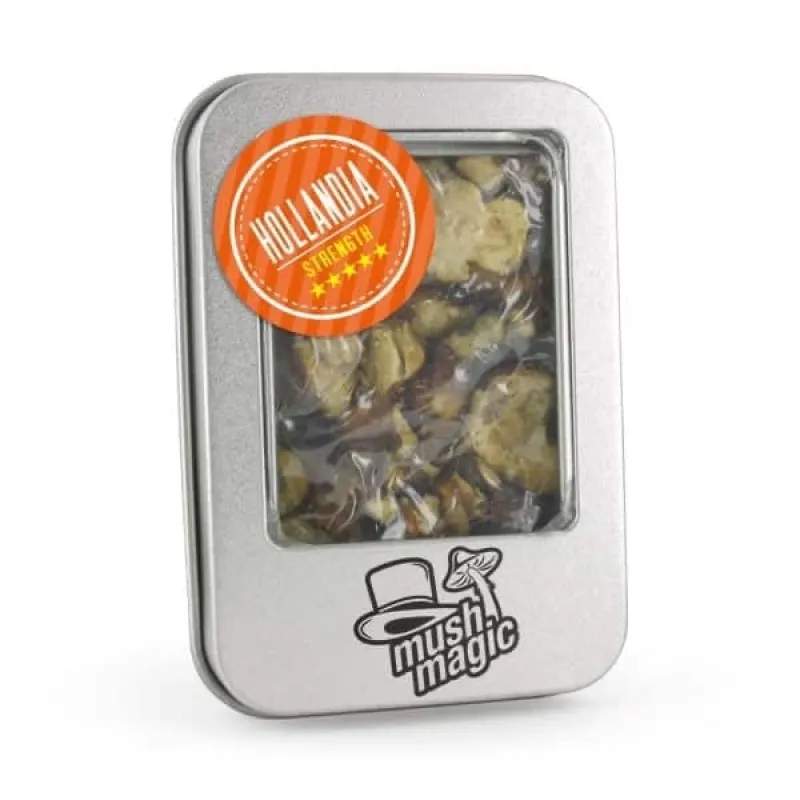
Hollandia truffel
19,00 €
Hollandia truffles represent one of the most potent psilocybin-containing sclerotia available for experienced psychonauts seeking profound introspective journeys. Rich in psilocybin and psilocin, these visually intense truffles deliver deeply transformative experiences while offering unexpected nutritional benefits. This comprehensive guide explores their psychoactive effects, nutritional profile, legal status, and essential safety considerations for informed consumption.
Quick Facts Panel
| Active Compounds: | Psilocybin and psilocin naturally occurring in concentrated levels |
| Subjective Profile: | Highly visual, intensely introspective, potent strength requiring experience |
| Nutritional Highlights (per 100g fresh): | 16.7g fiber, 5.3g protein, 13.6mg sodium |
| Typical Duration: | 4-6 hours total experience with 2-3 hour peak intensity |
| Legal Status: | Legal in the Netherlands; varies globally – verify local regulations before use |
Psychoactive Effects & Trip Profile
What to Expect
Hollandia truffles deliver one of the most intense psilocybin experiences available through natural means. Users consistently report profound visual enhancements including vivid color saturation, intricate geometric patterns, and heightened visual imagination that can transform ordinary environments into extraordinary landscapes. These effects typically manifest within 30-60 minutes of consumption and build to remarkable intensity.
The cognitive and emotional dimensions of Hollandia experiences are equally profound. Users frequently encounter heightened introspection that facilitates deep self-examination and emotional processing. Time perception becomes significantly altered, with minutes feeling like hours during peak effects. Many report breakthrough moments of emotional catharsis, spiritual insight, and enhanced understanding of personal relationships and life patterns.
Due to their exceptional potency, Hollandia truffles are strongly recommended for users with previous psychedelic experience. First-time users or those sensitive to psilocybin may find the intensity overwhelming, making proper preparation and dosing absolutely critical for positive outcomes.
Typical Time Course
The onset phase typically occurs within 20-60 minutes of consumption, though individual factors significantly influence timing. Users first notice subtle changes in perception, mood elevation, and enhanced sensory awareness. This gradually builds into more pronounced effects including visual distortions and altered thought patterns.
Peak effects generally occur 90-180 minutes after consumption and maintain intensity for 2-3 hours. During this phase, users experience the full spectrum of Hollandia’s psychoactive properties including intense visuals, profound introspection, and significant alterations in consciousness. The peak represents the most challenging and potentially transformative portion of the experience.
The descent phase spans 2-4 hours as effects gradually diminish. Users often report continued heightened awareness, emotional openness, and enhanced creativity during this period. Complete return to baseline typically occurs 6-8 hours post-consumption, though some subtle aftereffects may persist for 12-24 hours.
Common Variations & Influencing Factors
Experience intensity and character vary significantly based on individual physiology and environmental factors. Body weight, metabolism rate, recent food consumption, and tolerance levels all influence onset time and effect magnitude. Empty stomach consumption typically produces faster onset and more intense effects, while eating beforehand may delay and moderate the experience.
Set and setting remain paramount factors determining experience quality. Mental state, physical environment, presence of trusted companions, and preparation level significantly impact whether users have positive or challenging experiences. Hollandia’s potency amplifies both positive and negative environmental influences.
Safety-minded Trip Management
Proper preparation begins with honest self-assessment of mental state and motivation for use. Users should avoid Hollandia during periods of emotional instability, major life stress, or when dealing with unresolved trauma without therapeutic support. Creating a safe, comfortable environment with trusted companions or experienced trip sitters provides essential security for navigating intense experiences.
During challenging moments, focus on controlled breathing techniques, grounding exercises connecting with physical sensations, and maintaining adequate hydration. Having predetermined calming music, comfortable spaces for retreat, and emergency contact information readily available helps manage difficult experiences. If psychological distress becomes severe or persists beyond normal duration, seek immediate professional medical assistance.
Who Should Avoid
Individuals with personal or family history of psychosis, schizophrenia, or unstable bipolar disorder should completely avoid psilocybin use due to risks of triggering severe psychiatric episodes. Pregnant or nursing women should not consume Hollandia truffles due to unknown effects on fetal development and infant health.
Young adolescents with developing brains face increased risks of adverse psychological effects and should avoid use until reaching full neurological maturity. People with serious cardiovascular conditions including heart rhythm disorders should consult medical professionals before considering use, as psilocybin can affect heart rate and blood pressure.
Certain medications create dangerous interactions with psilocybin. SSRIs, SNRIs, MAOIs, and other serotonergic drugs can unpredictably alter effects or potentially cause serotonin syndrome. Always consult healthcare providers about medication interactions before using Hollandia truffles.
Nutritional Profile & Health Considerations
Full Nutritional Snapshot
Hollandia truffles provide surprising nutritional value beyond their psychoactive properties. Per 100 grams of fresh truffles, users receive 16.7 grams of dietary fiber – representing over 60% of daily recommended intake. This exceptional fiber content supports digestive health and may contribute to beneficial gut microbiome effects.
The protein content of 5.3 grams per 100 grams provides essential amino acids, though truffles alone cannot meet daily protein requirements. The remarkably low sodium content of just 13.6 milligrams makes Hollandia suitable for low-sodium dietary approaches.
Additional micronutrients include various B vitamins, particularly those involved in neurological function, along with minerals like potassium, phosphorus, and trace amounts of selenium. These nutritional values represent fresh truffle weight and may concentrate when dried or processed.
Potential Nutritional Benefits
The exceptional fiber content supports healthy digestion, promotes beneficial gut bacteria growth, and may contribute to stable blood sugar levels. Regular fiber intake associates with reduced cardiovascular disease risk and improved digestive regularity, though truffles represent supplemental rather than primary dietary fiber sources.
The modest protein contribution provides essential amino acids including those involved in neurotransmitter synthesis. While insufficient as a primary protein source, these amino acids may support the neurological processes underlying psilocybin’s effects.
Micronutrient contributions, particularly B vitamins, support nervous system function and energy metabolism. However, users should not rely on truffles as primary micronutrient sources but rather appreciate these benefits as complementary to their psychoactive properties.
Evidence-based Therapeutic Notes
Clinical research demonstrates significant therapeutic potential for psilocybin in treating treatment-resistant depression, with multiple studies showing sustained improvement in depression scores weeks to months after guided sessions. Johns Hopkins University and Imperial College London have published groundbreaking research on psilocybin’s efficacy for depression, PTSD, and addiction treatment.
Cancer patients receiving psilocybin therapy for anxiety and depression show remarkable improvement in psychological distress and quality of life measures. These studies consistently emphasize the importance of controlled clinical settings with trained therapeutic support, highlighting the difference between medical and recreational use contexts.
Addiction treatment research shows promising results for alcohol and tobacco cessation using psilocybin-assisted therapy. However, these clinical benefits occur within carefully structured therapeutic protocols with extensive preparation, professional guidance, and integration support – conditions rarely available in recreational use settings.
Microdosing: Uses, Protocols & Cautions
Why People Microdose Hollandia
Microdosing involves consuming sub-perceptual amounts of psilocybin to achieve subtle cognitive and emotional benefits without obvious psychoactive effects. Users report enhanced mood stability, increased creativity, improved focus, and reduced anxiety during microdosing protocols using Hollandia truffles.
Many practitioners seek cognitive enhancement including improved problem-solving ability, enhanced pattern recognition, and increased mental flexibility. Others pursue emotional benefits such as reduced depression symptoms, decreased social anxiety, and greater emotional resilience in challenging situations.
Creative professionals often report enhanced inspiration, reduced creative blocks, and improved artistic flow states during microdosing periods. However, these reported benefits come primarily from anecdotal accounts rather than controlled scientific studies.
Practical Guidance
Typical microdosing protocols involve consuming 0.1-0.3 grams of fresh Hollandia truffles every three days, allowing for tolerance reset between doses. Users should start with minimal amounts and gradually adjust based on subtle effects and personal response patterns.
Successful microdosing requires accurate measurement using precision scales, consistent scheduling, and detailed effect tracking through journals or apps. Users should monitor mood, productivity, sleep quality, and any negative effects throughout their protocol period.
Many practitioners follow structured schedules such as one day on, two days off, or one day on, three days off, continuing for 4-8 week cycles followed by extended breaks. The specific potency of Hollandia truffles requires extra attention to accurate dosing compared to less potent varieties.
Safety & Limitations
Extended microdosing may lead to tolerance development, requiring increased doses to achieve similar effects and potentially diminishing the sub-perceptual nature of the practice. Some users report increased anxiety, irritability, or mood instability with regular use, particularly at higher microdose levels.
The same medication interactions and contraindications that apply to full doses also affect microdosing. SSRIs and other serotonergic medications can unpredictably alter effects even at sub-perceptual doses, requiring medical consultation before beginning protocols.
Limited long-term safety data exists for regular microdosing practices, and individual responses vary significantly. Users should approach microdosing as experimental self-research rather than established medical treatment, maintaining awareness of both benefits and potential risks.
Legal Status & Market Trends
Global Legal Landscape
The Netherlands maintains unique legal status for psilocybin truffles, allowing cultivation, sale, and possession for adults within specific regulatory frameworks. This legal environment has established the Netherlands as a primary access point for legal psilocybin experiences, attracting international visitors seeking safe, regulated truffle access.
Globally, psilocybin legal status varies dramatically and changes rapidly as jurisdictions reconsider psychedelic policies. Several U.S. states and cities have decriminalized psilocybin possession, while others maintain strict prohibition with serious criminal penalties. Canada allows limited medical psilocybin access through special programs, and Australia recently approved medical psilocybin for specific conditions.
Portugal, Brazil, and several other countries maintain decriminalized approaches focusing on health rather than criminal justice responses to psychedelic use. However, legal status can change quickly, making verification of current local laws essential before possession or use in any jurisdiction.
Market Size & Growth
The global psychedelic mushroom market projects reaching approximately USD 1.7 billion by 2025, with compound annual growth rates of 10-12% driven by therapeutic research advances and changing regulatory attitudes. This growth reflects increasing institutional investment in psychedelic research and growing consumer interest in alternative mental health treatments.
Medical and therapeutic applications drive much of this market expansion, with pharmaceutical companies investing heavily in psilocybin drug development for depression, PTSD, and addiction treatment. Clinical trial success rates significantly exceed traditional pharmaceutical development, attracting substantial venture capital and institutional funding.
Consumer markets in legal jurisdictions show steady growth as public awareness increases and stigma decreases. Educational initiatives, media coverage of therapeutic research, and changing cultural attitudes contribute to expanding consumer interest in legal psilocybin access.
Implications for Consumers & Industry
Increasing availability through therapeutic clinics provides professional guidance and medical supervision for psilocybin experiences, offering safer alternatives to unregulated use. These clinical settings ensure proper screening, preparation, and integration support while maintaining legal compliance.
Quality control and laboratory testing become increasingly standard as markets mature and regulation develops. Professional testing for potency, contaminants, and purity provides consumer protection and establishes industry quality standards similar to other regulated substances.
The growing legitimacy of psychedelic therapy influences insurance coverage discussions and healthcare system integration, potentially making psilocybin treatments more accessible to patients who could benefit from supervised therapeutic use.
Sourcing, Quality & Lab Testing
Sourcing Considerations
High-quality Hollandia truffles require careful cultivation practices, proper harvesting timing, and appropriate post-harvest handling to maintain potency and prevent contamination. Reputable suppliers maintain detailed traceability from cultivation through distribution, ensuring product authenticity and quality consistency.
Fresh truffles should exhibit firm texture, minimal external moisture, and absence of visible mold or deterioration. Proper storage during transport and retail maintains product integrity and prevents potency degradation that can occur with temperature fluctuations or moisture exposure.
Cultivation environment factors including substrate quality, growing conditions, and harvest timing significantly influence final product potency and quality. Professional cultivators monitor these variables carefully to produce consistent, high-quality truffles meeting consumer expectations.
Quality Markers
Laboratory testing provides objective quality verification including precise psilocybin and psilocin content measurement, enabling accurate dosing and effect prediction. Potency testing reveals the actual psychoactive compound concentrations, which can vary significantly between batches and suppliers.
Contaminant testing screens for heavy metals, pesticide residues, and harmful microorganisms that could pose health risks. Professional labs test for bacteria, mold, yeast, and other potential contaminants using standardized protocols ensuring consumer safety.
Moisture content analysis helps determine proper storage requirements and shelf life expectations. Excessive moisture promotes degradation and contamination, while insufficient moisture may indicate improper drying that could affect potency or texture.
Storage & Preservation
Proper storage maintains truffle quality and potency over extended periods. Fresh truffles require refrigeration at 2-4°C in breathable containers that prevent moisture accumulation while maintaining necessary humidity levels. Plastic bags should be avoided as they promote condensation and spoilage.
Drying truffles extends shelf life significantly while concentrating potency per unit weight. Properly dried truffles stored in airtight containers with desiccant packets remain viable for months when kept in cool, dark environments away from temperature fluctuations.
Vacuum sealing fresh truffles for freezer storage provides long-term preservation options, though texture changes may occur upon thawing. Frozen truffles maintain potency effectively but may require different preparation methods compared to fresh consumption.
Practical Use & Consumption Methods
Forms & Preparation
Fresh Hollandia truffles can be consumed directly by thorough chewing, allowing for complete absorption of active compounds through oral mucosa and digestive processing. Fresh consumption provides the full spectrum of naturally occurring compounds and typically produces faster onset compared to other preparation methods.
Truffle tea preparation involves steeping chopped fresh or dried truffles in hot water for 15-20 minutes, straining, and consuming the resulting liquid. This method reduces stomach irritation some users experience with direct consumption while maintaining effective absorption of psychoactive compounds.
Drying and encapsulation provides precise dosing control and eliminates taste considerations some users find challenging with fresh consumption. Dried truffles concentrate in potency, requiring careful dose adjustment compared to fresh weight equivalents.
Measuring & Dosing Best Practices
Accurate measurement using precision scales capable of 0.1-gram resolution ensures consistent dosing and helps prevent accidental overconsumption. Digital scales with calibration weights provide the accuracy necessary for both full doses and microdosing protocols.
Understanding the difference between fresh and dried weight becomes critical when following dosing guidelines, as dried truffles contain approximately 90% less water weight while maintaining concentrated psychoactive compounds. Fresh truffle doses typically range 5-15 grams, while equivalent dried doses measure 0.5-1.5 grams.
First-time Hollandia users should start with conservative doses around 5-7 grams fresh weight and wait at least 90 minutes before considering additional consumption. The high potency of Hollandia makes careful dose escalation essential for avoiding overwhelming experiences.
Consumption Timing & Environmental Factors
Empty stomach consumption produces faster onset and more intense effects, typically beginning within 20-45 minutes. However, this approach may increase nausea in sensitive individuals and create more rapid transitions into peak effects that some find challenging to navigate.
Consuming truffles after light meals delays onset to 60-90 minutes while potentially reducing nausea and providing more gradual effect transitions. The food content and type influence absorption patterns, with fatty foods potentially enhancing absorption while fiber-rich foods may slow it.
Environmental preparation including comfortable settings, appropriate lighting, ambient temperature control, and access to bathroom facilities enhances user comfort and safety throughout the experience duration.
Safety, Contraindications & Drug Interactions
Medical Contraindications
Individuals with personal or family history of psychotic disorders including schizophrenia face significantly elevated risks of triggering severe psychiatric episodes that may require emergency medical intervention. These risks persist even with small doses and careful preparation.
Bipolar disorder, particularly during manic or mixed episodes, creates dangerous combinations with psilocybin that can exacerbate mood instability and impair judgment. Stable bipolar patients considering use should consult psychiatric professionals familiar with psychedelic interactions.
Cardiovascular conditions including recent heart attacks, unstable angina, severe arrhythmias, or uncontrolled hypertension may be exacerbated by psilocybin’s effects on heart rate and blood pressure. Medical evaluation becomes essential before use in individuals with heart conditions.
Drug Interactions
SSRI antidepressants significantly reduce psilocybin effects due to serotonin receptor downregulation, potentially leading users to consume dangerous amounts seeking desired effects. Discontinuing SSRIs requires medical supervision and weeks of tapering to avoid withdrawal complications.
MAOI medications create potentially dangerous interactions by preventing psilocybin metabolism, leading to prolonged and intensified effects that may become medically serious. Anyone taking MAOIs should never consume psilocybin without medical supervision.
Other serotonergic medications including SNRIs, tramadol, and some migraine medications can unpredictably alter psilocybin effects. Always disclose all medications to healthcare providers when seeking advice about psilocybin interactions.
Emergency Guidance
Severe adverse reactions require immediate medical attention, particularly if users experience sustained panic, cardiovascular symptoms, seizures, or persistent psychotic symptoms beyond normal duration. Call emergency services if breathing difficulties, chest pain, or loss of consciousness occurs.
During psychological emergencies, keep affected individuals in safe, calm environments with trusted companions who can provide reassurance and prevent dangerous behaviors. Avoid restraining unless absolutely necessary to prevent self-harm, as physical restriction often increases panic and agitation.
Maintain hydration with small amounts of water or electrolyte solutions, avoid alcohol or other substances, and document timing and symptoms for medical professionals. Never leave individuals experiencing severe adverse reactions alone, even if symptoms appear to improve temporarily.
Frequently Asked Questions
What makes Hollandia truffles different from other varieties?
Hollandia truffles contain higher concentrations of psilocybin and psilocin compared to most other varieties, producing more intense visual effects and deeper introspective experiences. Their potency makes them particularly suitable for experienced users seeking profound psychoactive effects.
Are Hollandia truffles legal where I live?
Hollandia truffles are legal in the Netherlands under specific regulations. Legal status varies significantly worldwide, with some jurisdictions allowing possession while others maintain strict prohibition. Always verify current local laws before purchasing or possessing psilocybin-containing materials.
What are the typical effects and duration?
Effects typically include intense visual enhancements, profound introspection, altered time perception, and emotional processing lasting 4-6 hours total. Peak effects occur 90-180 minutes after consumption and maintain intensity for 2-3 hours before gradually diminishing.
Can Hollandia truffles be microdosed safely?
Microdosing involves consuming 0.1-0.3 grams of fresh truffles every few days for subtle cognitive and emotional benefits without obvious psychoactive effects. While many report positive outcomes, long-term safety data remains limited and individual responses vary significantly.
What should I do during a challenging experience?
Focus on controlled breathing, stay hydrated, remain in safe environments with trusted companions, and remember that effects are temporary. Use grounding techniques connecting with physical sensations and avoid fighting or resisting the experience. Seek medical help if severe distress persists.
Do Hollandia truffles provide nutritional benefits?
Yes, they contain 16.7g fiber and 5.3g protein per 100g fresh weight, along with various micronutrients including B vitamins and minerals. However, they should be considered supplemental rather than primary nutritional sources due to typical consumption amounts and frequency.
How should I store Hollandia truffles?
Fresh truffles require refrigeration at 2-4°C in breathable containers, maintaining proper humidity while preventing moisture accumulation. Dried truffles store well in airtight containers with desiccants in cool, dark environments for extended periods.
What medications interact dangerously with psilocybin?
SSRIs, SNRIs, MAOIs, and other serotonergic medications can unpredictably alter effects or create dangerous interactions. Always consult healthcare providers about medication interactions before using psilocybin-containing substances, even at microdose levels.
Who should avoid using Hollandia truffles entirely?
Individuals with personal or family history of psychosis, schizophrenia, unstable bipolar disorder, serious cardiovascular conditions, pregnant or nursing women, and young adolescents should avoid use due to elevated health risks and potential complications.
How do I ensure I’m getting authentic, quality Hollandia truffles?
Look for suppliers providing laboratory testing results for potency and contaminants, detailed sourcing information, proper storage and handling procedures, and clear product labeling. Quality products should exhibit firm texture, appropriate appearance, and absence of visible deterioration or contamination.
 Premium ingredients for optimal results
Long-lasting effects for extended pleasure
Safe and certified formulations
Fast-acting solutions for instant impact
Discreet packaging for total privacy
Premium ingredients for optimal results
Long-lasting effects for extended pleasure
Safe and certified formulations
Fast-acting solutions for instant impact
Discreet packaging for total privacy
Premium ingredients for optimal results
Long-lasting effects for extended pleasure
Safe and certified formulations
Fast-acting solutions for instant impact
Discreet packaging for total privacy
Premium ingredients for optimal results
Long-lasting effects for extended pleasure
Safe and certified formulations
Fast-acting solutions for instant impact
Discreet packaging for total privacy
Related Products

Frequently Asked Questions
Everything You Need to Know