




How Long Does Cannabis Take to Grow? A Beginner’s Step-by-Step Guide

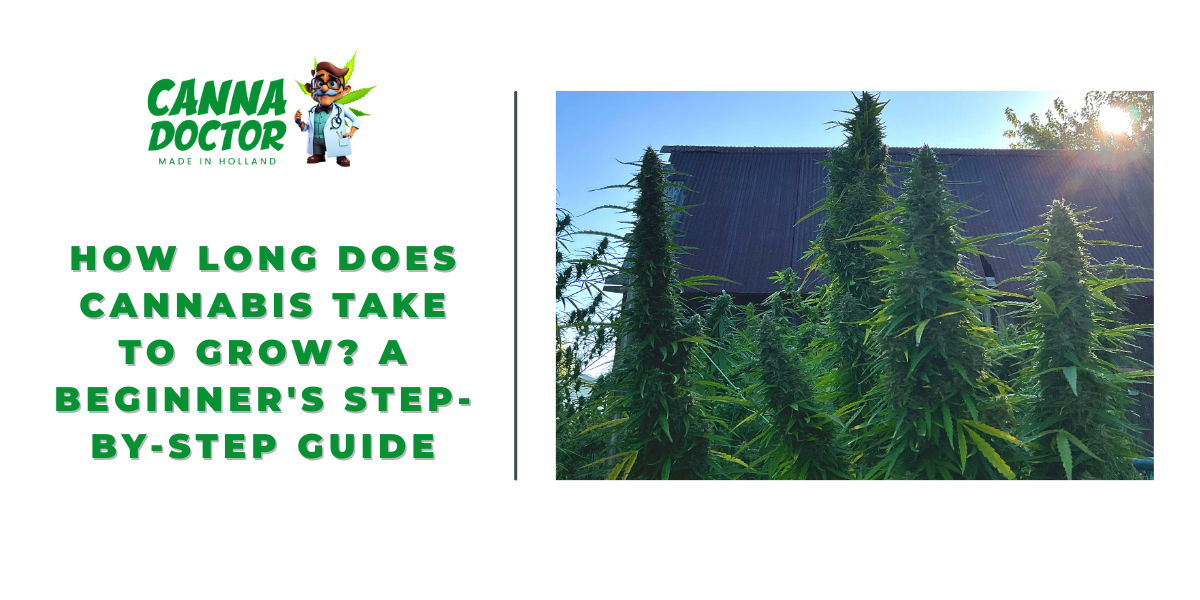
So you’re curious about growing cannabis and wondering how long it actually takes. Maybe you’ve heard it’s quick, or maybe you’re worried it’ll take forever. The truth? It depends on what you’re growing and how you grow it, but most beginners can expect their first harvest anywhere from 8 to 20 weeks after planting a seed.
Let’s break down exactly what happens during those weeks, what affects your timeline, and how you can set yourself up for success on your first grow.
Quick-Answer Cheat Sheet
Typical Grow Time: 8 to 20+ weeks total (seed to harvest)
- Autoflower strains: 8 to 12 weeks
- Photoperiod strains: 12 to 20+ weeks
Growth Stages: Germination → Seedling → Vegetative → Flowering
Biggest Delays: Overwatering, insufficient light, poor environment control, choosing slow-maturing strains
Best For Beginners: Indoor autoflower setup for the fastest, most predictable harvest
Legality: Cannabis cultivation is heavily regulated. Always verify your state and local laws before starting.
Understanding Cannabis Growth Cycles
Cannabis doesn’t just sprout and produce buds overnight. The plant goes through distinct life stages, each with its own timeline and needs. Think of it like raising a pet or tending a garden: you’re nurturing a living organism through phases of rapid growth, maturation, and finally, readiness for harvest.
Each stage requires different light schedules, nutrient mixes, humidity levels, and attention. Miss a step or rush through one, and you might stunt your plant or delay your harvest by weeks.
Here’s the big picture: germination gets things started in days, the seedling stage lasts a few weeks, the vegetative stage is where your plant does most of its growing (and where you have the most control over timing), and flowering is when buds form and ripen. How long each stage lasts depends heavily on whether you’re growing an autoflower or photoperiod strain, and whether you’re indoors or outdoors.
Stage-by-Stage Cannabis Timelines
Germination (1 to 10 Days)
This is where it all begins. You start with a dry seed, and within a few days, that seed cracks open, sends out a taproot, and pushes up its first tiny sprout.
What happens: The seed absorbs moisture, swells, and splits. A small white root (the taproot) emerges first, followed by the stem and the first pair of leaves (called cotyledons).
Environmental needs: Warmth (around 70 to 85°F), high humidity, and darkness or very low light. Many growers use the paper towel method or plant directly into a starter cube or soil.
Signs of success vs. problems: A healthy seed will crack within 24 to 72 hours and sprout within a week. If you see mold, a rotten smell, or no activity after 10 days, the seed may not be viable. Fresh, quality seeds from a reputable source make a huge difference here.
If you’re legally growing for medical purposes, ensuring you start with compliant, quality genetics is part of staying within the law.
Seedling (1 to 3 Weeks)
Once your sprout breaks the surface, it enters the seedling stage. This is a delicate period where the plant is vulnerable but growing fast.
What happens: The first set of true leaves (serrated, cannabis-shaped) appear. Roots spread rapidly. The plant is still small and fragile but visibly getting stronger each day.
Critical care: Gentle light (a T5 fluorescent or low-wattage LED works great), steady humidity around 60 to 70%, and careful watering. Seedlings don’t need much water; their root systems are tiny. Overwatering is the number one killer at this stage.
Common risks: Overwatering leads to damping off (a fungal issue that kills seedlings). Stretching (tall, thin stems) happens when light is too far away or too weak. Keep your light close but not so close that it burns the delicate leaves.
Vegetative Stage (2 to 16 Weeks)
This is where your cannabis plant really takes off. The vegetative stage is all about growth: stems thicken, leaves multiply, and the plant builds the structure that will eventually support heavy buds.
What happens: Rapid development of foliage and branches. The plant is photosynthesizing like crazy, building energy reserves for flowering.
Duration differences:
- Autoflower strains: 2 to 4 weeks (fixed, genetically timed)
- Photoperiod strains: 4 to 16 weeks (you control this by adjusting light schedules)
With photoperiods, you decide when to flip to flowering by changing the light cycle. Want a bigger plant? Keep it in veg longer. Want a faster harvest? Flip it sooner. Autoflowers don’t give you this choice; they flower on their own internal clock.
Indications to move to next stage: Look for pre-flowers (tiny hairs or pistils at the nodes) that signal sexual maturity. For photoperiods, this is your cue that the plant is ready to flower when you change the light schedule.
Best practices:
- Light: 18 to 24 hours of light per day for photoperiods (18/6 is common). Autoflowers thrive on 18 to 20 hours.
- Nutrients: Start feeding vegetative nutrients (higher nitrogen) after the first few weeks.
- Training: Techniques like topping (cutting the main stem to encourage bushier growth) or low-stress training (bending branches) can be done here to shape the plant and increase yield. However, these techniques can add a week or two to your timeline if you’re not careful.
Flowering Stage (6 to 14 Weeks)
This is the payoff. Flowering is when your cannabis plant stops focusing on leaves and starts producing the resinous buds you’re after.
What happens: The plant stops stretching vertically (mostly), and energy shifts to bud development. You’ll see clusters of flowers forming at the nodes, pistils (hairs) emerging, and trichomes (resin glands) coating the buds.
Subphases:
- Pre-flowering (weeks 1 to 2): First signs of sex appear. Male plants show pollen sacs; females show white hairs (pistils). If you’re growing regular seeds, remove males immediately to avoid pollination.
- Main flowering (weeks 2 to 8+): Buds bulk up. This is where the magic happens. Trichome production ramps up, and the plant smells increasingly pungent.
- Ripening and finish (final 2 to 3 weeks): Pistils start to curl and darken (from white to orange or brown). Trichomes shift from clear to cloudy to amber. This is when you’re watching closely to decide harvest timing.
How to check readiness: Use a jeweler’s loupe or magnifying glass to inspect trichomes. Clear trichomes mean it’s too early. Cloudy trichomes indicate peak THC. Amber trichomes suggest more sedative effects (CBN development). Most growers harvest when trichomes are mostly cloudy with some amber.
Common problems: Bud rot (mold inside dense buds), nutrient burn from overfeeding, and pests like spider mites. Good airflow, moderate humidity (40 to 50%), and careful feeding prevent most issues.
Photoperiod vs. Autoflower: Which is Faster?
This is one of the biggest decisions for a beginner. Let’s compare.
| Feature | Autoflower | Photoperiod |
|---|---|---|
| Total Time (Seed to Harvest) | 8–12 weeks | 12–20+ weeks |
| Vegetative Control | Fixed (2–4 weeks) | Flexible (you decide when to flower) |
| Light Schedule | Any schedule (18+ hours works best) | 18/6 for vegetative stage, 12/12 for flowering |
| Yield | Smaller (but faster turnaround) | Larger (if vegetative stage is extended) |
| Ease for Beginners | Very easy, forgiving | Moderate; requires light schedule changes |
| Indoor / Outdoor | Great for both | Better for indoor control or experienced outdoor growers |
Autoflower strains are consistent, quick, and simple. You can’t really mess up the timing because the plant does it for you. They’re perfect if you want a harvest in under three months and don’t want to worry about light schedules.
Photoperiod strains give you more control. You can grow a massive plant by keeping it in veg for months, or you can flip it early for a smaller, faster harvest. They often yield more, but they take longer and require more attention to light cycles.
For your first grow, autoflowers are usually the best bet. They’re fast, they’re tough, and they’ll teach you the basics without demanding perfection.
Indoor vs. Outdoor Growing: How Does It Affect Timeline?
Where you grow matters just as much as what you grow.
Indoor growing:
- Control: You control light, temperature, humidity, and airflow. This means you can grow year-round and dial in conditions for faster growth.
- Timeline: Indoors, you set the schedule. Autoflowers take their usual 8 to 12 weeks. Photoperiods take as long as you let them veg, then 8 to 10 weeks of flowering.
- Speed: Generally faster because you can optimize everything. No waiting for seasons.
Outdoor growing:
- Natural cycles: Photoperiod plants flower naturally when daylight hours shorten in late summer/early fall. You plant in spring (after last frost), veg all summer, and harvest in fall (September to November in the Northern Hemisphere).
- Timeline: Seed to harvest typically spans 5 to 7 months outdoors for photoperiods. Autoflowers can be planted multiple times per season (spring, summer) since they’re not light-dependent.
- Climate factors: Temperature swings, rain, pests, and local daylight hours all affect growth speed and harvest timing.
Outdoor factors:
- Season: Late spring planting, fall harvest (photoperiods)
- Temperature: Cannabis prefers 70 to 85°F during the day. Too cold or too hot slows growth.
- Daylight hours: Photoperiods need 12+ hours of light to stay in veg, less than 12 to flower.
- Legal restrictions: Some states allow outdoor grows, others don’t. Always check local laws.
Outdoor timeline example (California, photoperiod):
- Late April: Germinate seeds or transplant clones
- May to August: Vegetative growth
- September to October: Flowering
- Late October to early November: Harvest
Indoor growers can run multiple crops per year. Outdoor growers typically get one photoperiod harvest per season (or two to three autoflower runs).
What Affects How Fast Cannabis Grows?
Not all grows are created equal. Here’s what can speed things up or slow them down.
Genetics and Strain Choice
Some strains are bred for speed. Autoflowers are inherently faster than photoperiods. Among photoperiods, indica-dominant strains often flower faster (8 weeks) than sativa-dominant ones (10 to 14 weeks).
Fastest strains:
- Most autoflowers (8 to 10 weeks total)
- Quick photoperiods like Northern Lights, Blue Mystic, or Early Skunk (8 to 9 weeks of flowering)
What makes a strain slow or fast?
- Genetics: Sativas are slower than indicas.
- Breeding: Some strains are selected for short flowering times.
- Stability: High-quality genetics grow more predictably and vigorously.
Lighting, Environment, and Growing Medium
Lighting:
- Indoor spectrum: Full-spectrum LEDs or HPS (high-pressure sodium) lights work best. Cheap or weak lights slow growth dramatically.
- Recommended schedule: 18/6 or 20/4 for veg, 12/12 for flowering (photoperiods). Autoflowers do well on 18/6 or even 20/4 throughout.
- Common pitfalls: Lights too far away cause stretching. Lights too close cause light burn. Insufficient wattage means slow, spindly growth.
Temperature:
- Ideal range: 70 to 85°F during lights-on, 60 to 70°F during lights-off.
- Monitoring tools: Digital thermometer/hygrometer combos are cheap and essential.
- Heat stress symptoms: Leaves curling up, bleaching, or crisping. Cold stress causes slow growth and purple discoloration (not the good kind).
Humidity:
- Ideal range by stage:
- Germination/Seedling: 60 to 70%
- Vegetative: 50 to 70%
- Flowering: 40 to 50%
- How to control: Humidifiers, dehumidifiers, and good ventilation. High humidity in flower invites mold. Low humidity in seedling stage stresses young plants.
Soil vs. Hydroponics:
- Soil: Slower but more forgiving. Great for beginners. Organic nutrients buffer mistakes.
- Hydroponics: Faster growth (roots get oxygen and nutrients directly), but less margin for error. pH swings or nutrient imbalances can crash a plant overnight.
For speed, hydro wins. For ease and safety, soil wins. Most beginners should start with quality soil.
Training and Setups
Plant training techniques:
- Topping: Cutting the main stem to create two main colas. Increases yield but adds 1 to 2 weeks to veg.
- Low-stress training (LST): Bending and tying branches to expose more bud sites to light. Minimal time delay, good yield boost.
- SCROG (Screen of Green) / SOG (Sea of Green): Advanced techniques that can increase yield but require careful timing and space management.
Training can improve your harvest, but it can also extend your timeline if you’re not careful. For your first grow, keep it simple.
Equipment checklist for beginners:
- Grow tent or dedicated space
- Full-spectrum LED grow light (appropriate wattage for your space)
- Fans for airflow
- Timer for light schedules
- Thermometer and hygrometer
- pH meter and nutrients
- Quality soil or growing medium
- Seeds from a legal, compliant source
Legal note: Cannabis cultivation laws vary widely. Some states allow medical patients to grow a limited number of plants at home. Others prohibit it entirely. Before you invest in equipment, verify what’s legal in your state.
Grow Time Calculator: Estimate Your Harvest Date
Let’s say you’re starting germination today. Here’s a simple way to estimate when you’ll harvest:
Autoflower, Indoor:
- Germination: 3 to 7 days
- Seedling: 1 to 2 weeks
- Vegetative: 2 to 4 weeks
- Flowering: 6 to 8 weeks
- Total: 9 to 12 weeks from germination to harvest
Photoperiod, Indoor:
- Germination: 3 to 7 days
- Seedling: 1 to 2 weeks
- Vegetative: 4 to 8 weeks (your choice)
- Flowering: 8 to 10 weeks
- Total: 13 to 20 weeks from germination to harvest
Photoperiod, Outdoor (Northern Hemisphere):
- Start: Late April/Early May
- Harvest: Late October/Early November
- Total: ~6 months
Add an extra week or two if you encounter problems, try training techniques, or grow a slower strain.
First-Time Grower FAQs
How quickly can I harvest my first cannabis plant? If you choose a fast autoflower strain and grow indoors, you can harvest in as little as 8 to 10 weeks from the day you germinate the seed. Photoperiods take longer, typically 12 to 20 weeks.
What’s the fastest way to grow cannabis without sacrificing quality? Start with a quality autoflower strain, grow indoors with good lights, maintain stable temperature and humidity, and avoid common mistakes like overwatering or underfeeding. Don’t rush the flowering stage; let trichomes tell you when it’s time to harvest.
Which mistakes slow down cannabis growth most often? Overwatering is the biggest culprit. It stresses roots and invites disease. Weak or poorly positioned lights cause slow, stretchy growth. Unstable temperatures and poor airflow also stunt development.
How will I know my plants are ready to harvest? Check trichomes with a magnifying glass. When most are cloudy with some turning amber, it’s time. Pistils will also have darkened and curled in. The plant will look “ripe,” with dense, resinous buds.
Can I speed up flowering time safely? Not really. Flowering time is mostly genetic. You can optimize conditions (light, nutrients, environment), but trying to rush it by cutting light or forcing early harvest will just reduce yield and potency. Patience pays off.
What happens if my plant takes longer than expected? It’s common for first-time grows to take a bit longer due to learning curves or environmental hiccups. As long as the plant looks healthy, just keep tending to it. Extra time in veg means a bigger plant. Extra time in flower might mean higher yields if you’re dialing in conditions.
Do all strains grow at the same rate? No. Indica-dominant strains generally flower faster than sativa-dominant ones. Autoflowers are faster than photoperiods. Always check the breeder’s estimated timeline for the specific strain you’re growing.
Is growing cannabis legal where I live? That depends entirely on your state and local laws. Some states allow medical patients to cultivate a limited number of plants at home. Others prohibit home cultivation entirely. Always research your local regulations.
How important is curing and drying after harvest? Very important, but often overlooked. Drying takes about 7 to 14 days in a dark, well-ventilated space. Curing (storing dried buds in jars with controlled humidity) takes another 2 to 4 weeks minimum. Rushing this ruins flavor, harshness, and potency. Factor this into your total timeline; your “harvest day” isn’t the day you can start using your buds.
Common Delays and How to Troubleshoot
Top beginner mistakes causing slow growth:
- Overwatering or underwatering: Overwatering is more common. Let the soil dry out between waterings. Stick your finger an inch into the soil; if it’s dry, water. If it’s damp, wait.
- Low or unstable light intensity: Cheap bulbs or lights placed too far away result in weak, slow growth. Invest in a proper grow light and position it correctly (usually 12 to 24 inches from the canopy, depending on wattage).
- Poor airflow and high humidity: Stagnant air and excessive moisture slow growth and invite mold. Use oscillating fans and exhaust fans to keep air moving.
- Wrong nutrients or feeding schedule: Too much nitrogen in flower, or not enough in veg, stunts growth. Follow a simple beginner feeding schedule and don’t overdo it. It’s easier to add nutrients than to fix nutrient burn.
- Letting plants get rootbound: If roots run out of space, growth stalls. Transplant seedlings from small containers to larger pots before they get rootbound.
How to fix sluggish growth at each stage:
Germination fails:
- Use fresh seeds from a reputable source.
- Ensure consistent warmth (70 to 80°F).
- Don’t let seeds dry out or sit in standing water.
Seedlings stretch:
- Move the light closer (but not so close it burns them).
- Increase light intensity if using a weak bulb.
- Ensure 18+ hours of light per day.
Vegetative growth stalls:
- Confirm light schedule (18+ hours for photoperiods and autos).
- Check for pests or nutrient deficiencies (yellowing leaves, spots, etc.).
- Improve airflow and ensure temperatures are in the ideal range.
- Adjust nutrients; young plants may need a gentle feeding boost.
Flowering lags:
- Verify your light schedule is correct (12/12 for photoperiods).
- Check trichomes to see if the plant is actually developing; sometimes it just takes time.
- Ensure you’re not overfeeding or underfeeding.
- Keep humidity low (40 to 50%) to prevent mold and encourage resin production.
Visual checklist for healthy vs. stunted plants:
Healthy plant:
- Vibrant green leaves (not too dark, not too pale)
- Strong, thick stems
- Rapid new growth at the top
- Roots spreading well (visible in transparent pots or when transplanting)
- No spots, curling, or discoloration
Stunted or ill plant:
- Yellowing, browning, or spotted leaves
- Slow or no new growth
- Thin, weak stems
- Drooping or curling leaves
- Visible pests or mold
Catching problems early is key. Inspect your plants daily, especially in the first few weeks.
Key Takeaways: Cannabis Growth Timing Cheat Sheet
Autoflowers: Fast and simple, ready in about 10 weeks from seed. Perfect for beginners.
Photoperiods: More control, bigger yields, but longer timelines (12 to 20 weeks). Better for those who want to experiment.
Indoor growing: Fastest option with the most control. You can harvest multiple times per year.
Outdoor growing: Season-dependent. One photoperiod harvest per year, or multiple autoflower runs.
Most delays are preventable: Stable lighting, careful watering, proper nutrients, and a healthy environment keep your plants on schedule.
Always check local legal rules before growing: Laws vary widely. If you’re a medical cannabis patient, Canna Doctor can help you understand your rights and ensure you’re compliant with state regulations.
Use checklists and tracking tools: Keep a grow journal. Note when you germinate, when you transplant, when you switch to flower, and when you harvest. This helps you learn and improve for your next grow.
Growing cannabis is part science, part art, and a lot of patience. Your first grow might not be perfect, but with the right strain choice, good equipment, and attention to detail, you can have a successful harvest in just a couple of months. And once you’ve done it once, you’ll know exactly how to do it faster and better the next time.
If you’re exploring cannabis for medical purposes and want to ensure you’re doing everything legally and safely, Canna Doctor offers fast, confidential consultations with licensed physicians. We help you navigate state regulations, obtain your medical marijuana card, and understand your legal options for cultivation and access. Because the best grow starts with knowing you’re on the right side of the law.